
How to File Windshield Insurance Claim in KC
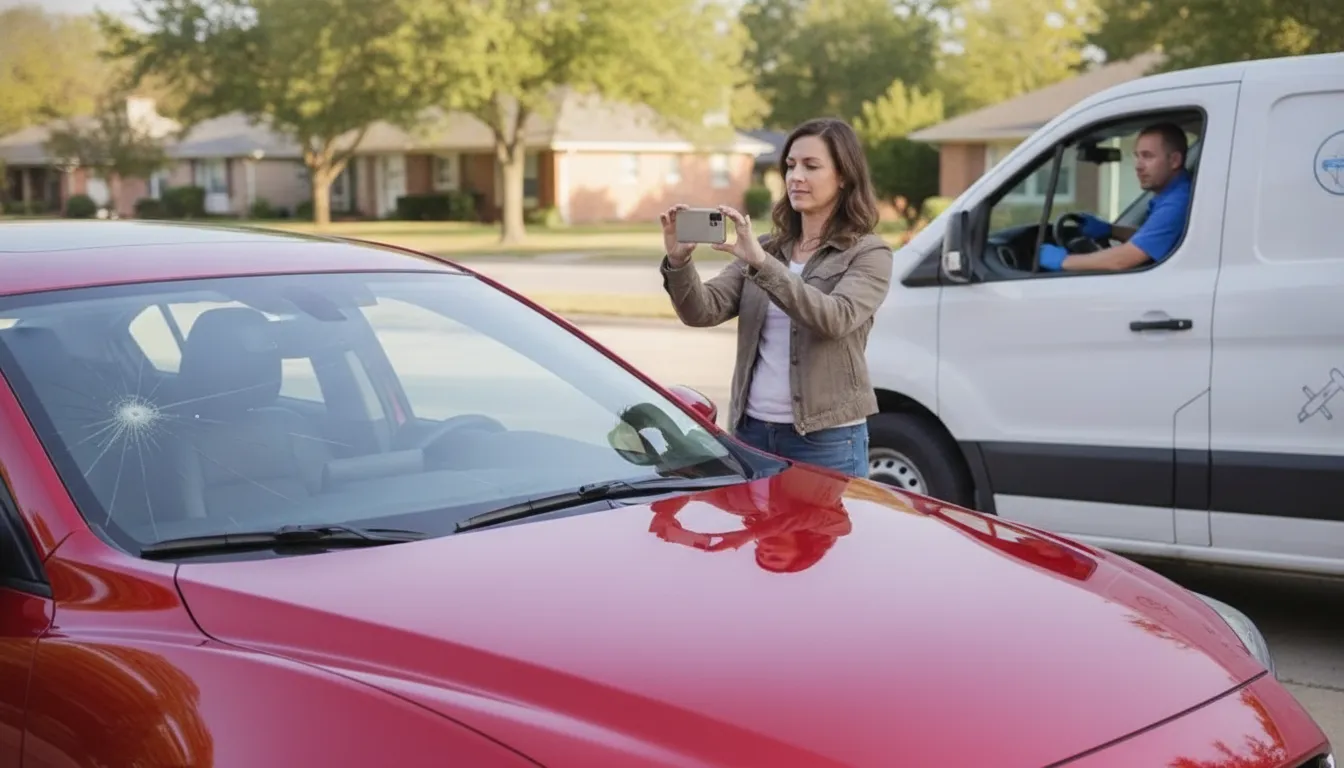
Windshield damage creates two separate decisions: how to keep driving safely and how to confirm what your policy may cover. For Kansas City drivers in Missouri and Kansas, the clearest claim starts with accurate evidence and policy-specific questions. A repair provider can help with the service handoff without deciding coverage.
To understand how to file windshield insurance claim, document the damage and circumstances, review your policy or declarations page, then ask your insurer about coverage, deductible, reporting channels, and provider requirements. Those details vary by carrier and policy. Confirm them before assuming a claim will be approved or cost nothing.
Before making that call, a few well-chosen photos and notes can clarify what happened. Support the conversation, and help determine whether the vehicle should be driven or serviced where it is.
What to Document Before You File a Windshield Claim
Answer: Before discussing a windshield claim, create a clear record of the damage. Note when you noticed it, where the vehicle was, and any circumstances you actually know. Good documentation helps you describe the loss accurately, but it does not determine coverage or replace your insurer's policy requirements.
Protect safety first. Look at the windshield from inside and outside the vehicle without touching loose glass or placing pressure on a crack. If the damage affects visibility, the windshield is separating, or the vehicle does not feel safe to drive, avoid driving farther than necessary. Arrange professional guidance or service at a safe location instead of treating the trip to a glass shop as routine.
Take wide and close photographs. Start with wide images that show the vehicle and the windshield's position. Follow with close photographs that capture the chip, crack, impact point, or broken area. Take several angles in good light, and include a view from the driver's position if visibility may be relevant. Do not edit the images in a way that removes or obscures the damage.
Write down the known details. Record the date and approximate time you noticed the damage, the vehicle's location, and what you know about how it occurred. For example, note a visible road impact only if you actually saw it. If the cause is unknown, say that it is unknown. Avoid guessing about the responsible driver, road conditions, or the exact time of the loss.
Note vehicle and service details. Keep the year, make, model, and current mileage available. If the windshield has a camera or other driver-assistance technology mounted near it, mention that when requesting an assessment. Those details can help a glass professional determine whether replacement and related calibration work may need to be considered.
Separate evidence from decisions. Documentation shows what happened to the glass; it does not establish whether a policy covers the damage, what deductible applies, or whether repair is appropriate. After recording the condition, ask the insurer or a qualified glass professional about the repair or replacement options for your vehicle. Keep the original photos and notes with later claim communications and service paperwork.
Do not delay unnecessarily if a small impact or crack is spreading. A professional can evaluate the damage and explain the next practical step without promising a particular claim result.
How Kansas City Drivers Can Learn How to File Windshield Insurance Claim
Answer: Before reporting windshield damage, identify which coverage may apply and confirm the deductible shown in your policy documents. Then ask your insurer how it wants the claim handled. General insurance information can help you prepare, but only your policy and carrier can determine coverage, responsibility, and claim requirements.
Start with the vocabulary used on your declarations page or policy summary. Comprehensive coverage generally addresses non-collision damage, which may include glass breakage caused by a rock, falling object, theft, vandalism, or another covered event. Collision coverage may apply when the windshield damage is part of a crash or impact with another vehicle or object. The applicable coverage depends on the facts of the loss and the terms of your policy. A government insurance guide explains that first-party vehicle damage claims typically require collision or comprehensive coverage. But that general description should not be treated as a Kansas or Missouri coverage rule. Review the source guidance, then confirm your own policy.
Liability coverage is different. Liability insurance generally addresses damage or injuries for which you are responsible to another party. It does not automatically pay to repair your own windshield. If another driver caused the damage in a collision, the claim path may involve your insurer. Depending on the circumstances and applicable policy provisions, it may also involve the other driver's insurer or both insurers.
Questions to ask your insurer or agent
- Which coverage applies to this type of windshield damage?
- What deductible applies, and is there a separate glass deductible?
- Do I need to report the damage before arranging inspection or service?
- May I choose the glass provider, or must I use a carrier network or administrator?
- Will repair, replacement, mobile service, or driver-assistance-system calibration be handled differently under my policy?
- Could reporting this loss affect my premium, claim history, or renewal terms?
Deductibles and claim procedures vary by insurer, policy type, and individual contract. A declarations page may list the relevant deductible, but it may not answer every glass-specific question. Asking about coverage and deductibles is generally different from formally reporting a loss, although your carrier can explain how its inquiry process works. Keep the representative's name, date, claim number if one is issued, and any written instructions. Those records make the later handoff to a glass provider clearer without assuming that coverage has been approved.
Which Claim-Filing Channel Should You Use?
Choose the channel that gives you a clear record of what was reported and what happens next. Depending on your carrier and policy, you may be able to start through an online portal, mobile app, phone line, insurance agent, or a glass-claim administrator. These routes are not interchangeable in every situation, so confirm the available process before assuming one channel will handle your claim.
Online portal or mobile app
Digital filing can be convenient when you have your policy information, vehicle details, and damage description ready. It may let you upload photos, select a service option, or review instructions without waiting on hold. Before submitting, check that the vehicle, loss date, location, and description are accurate. Save the confirmation screen, claim number, uploaded photos, and any messages or instructions provided in the portal.
Phone or insurance agent
Calling the carrier can be useful when the damage is difficult to describe. The policy language is unclear, or you need to ask about deductibles, provider choice, reporting deadlines, or authorization. An agent may also help explain where to direct questions, but the agent's role and ability to handle glass claims vary. Write down the representative's name, the date and time of the call, the claim number, and any next steps. Ask whether the instructions will also be sent in writing.
Glass administrator or provider-assisted route
Some carriers use a separate glass program or administrator to route repair and replacement requests. In other cases, a glass provider may help coordinate claim information after you request a quote. That assistance does not mean the provider decides coverage or approves the claim. Confirm who is responsible for authorization, what information must be supplied, and whether you may choose the provider.
What to save for each claim channel
- Online portal: Save the confirmation, claim number, uploaded photos, and submitted files.
- Mobile app: Save the submission receipt and any messages describing the next step.
- Phone or agent: Record the representative's name, date, instructions, and claim number.
- Glass administrator: Keep the authorization details and provider instructions supplied by the program.
Whichever channel you use, keep the claim number and written instructions with your photos, estimate, and service records. If the route creates conflicting directions, pause before scheduling and ask the carrier or agent which instruction controls. Carrier-specific routes, provider rules, and policy requirements vary, so the most reliable answer comes from your own insurance documents and insurer.
Should You Call the Insurer or Glass Provider First?
Answer: Either order may work, depending on your policy and the carrier's glass-claim process. Confirm provider choice and authorization requirements with the insurer, then share the claim details with the glass provider handling your repair or replacement.
Some drivers begin with the insurance company or agent to ask whether windshield damage is covered. What deductible applies, and whether the carrier directs customers to a particular administrator or network. Other drivers contact a glass provider first to discuss the damage and available service. A provider may be able to help coordinate claim information, but it cannot approve coverage, waive a deductible, or decide how your policy applies.
That distinction matters when you are trying to understand how to file windshield insurance claim information without creating confusion. Your insurer can explain the policy decision. The glass provider can assess the vehicle, prepare a quote, and coordinate the service details. Keep those roles separate even when the calls are handled close together.
When calling the insurer first makes sense
Contact the insurer or agent first when you are unsure whether glass damage falls under your coverage. Whether a deductible applies, or whether you must use a specific claim channel. Ask how to report the loss, whether you may select your own provider, and whether authorization is needed before work begins. Save the claim number and any written instructions. Coverage and deductible terms vary by policy, so your declarations page and carrier are the appropriate sources for a definitive answer.
When contacting a glass provider first may help
A glass provider can often explain the difference between repair and replacement, identify vehicle information needed for a quote, and help organize the handoff to the carrier. If you already have a claim number, provide it after scheduling or when the provider requests it. If you have not filed, ask whether the provider can assist with coordination, then confirm the arrangement with your insurer. Avision can assist with coordination, but coverage approval remains the insurer's responsibility.
For a vehicle-specific estimate, you can request a replacement quote. Have your vehicle identification details, damage description, location, and any carrier instructions available. This gives the provider useful information without treating a quote as a promise of coverage or a final claim decision.
How Do You Compare a Quote With Your Deductible?
Answer capsule: Compare the written quote with the deductible shown in your policy, then confirm with the insurer which work is covered and whether the claim requires authorization. A quote describes the expected service. It does not determine coverage, claim approval, or the amount you may owe. Those details depend on the policy, the damage assessment, and the carrier's process.
Start with a written, vehicle-specific quote
Ask for the quote in writing and check that it identifies your vehicle accurately, including the year, make, model, and any relevant trim or glass features. The windshield may include technology connected to driver-assistance systems, such as cameras or sensors. If replacement is needed, ask whether ADAS recalibration is part of the recommended work and how it will be documented.
Quote variables can include the type of glass, vehicle features, calibration requirements, service location, urgency, insurance coverage, and deductible. A quote that leaves out one of these details may not be comparable with another quote. Ask the provider to explain any difference rather than assuming the lower-looking option covers the same work.
Confirm what the deductible actually applies to
Before authorizing service, ask the insurer whether the damage falls under the policy's comprehensive, collision, or another applicable coverage category. Basic liability coverage generally addresses damage caused to other people or their property, not damage to your own vehicle. Coverage categories and deductibles are policy-specific, so confirm the applicable terms directly with the insurer or agent.
Useful questions include:
- Is the recommended repair or replacement covered under my policy?
- What deductible applies to this type of windshield damage?
- Does the carrier require an inspection, claim number, or prior authorization?
- May I choose the glass provider, and does the carrier have a preferred network?
- Will the claim process change if the assessment shifts from repair to replacement?
Separate the repair decision from the coverage decision
A glass professional should assess whether the windshield can be repaired safely or requires replacement based on the damage and vehicle-specific considerations. That technical assessment is separate from the insurer's coverage decision. Do not assume that a repair is covered, that replacement is required, or that either option will eliminate your deductible.
For additional context on vehicle, glass, feature, location, and urgency variables, review Kansas City replacement cost factors. Keep the quote, claim correspondence, and any authorization together so you can compare the recommended work with the policy terms before scheduling.
What Records Should You Keep After the Claim?
Answer: Keep your claim number, insurer communications, damage photos, estimates, invoices, warranty paperwork, and any ADAS calibration documentation together until the repair or replacement is fully resolved. A complete record makes it easier to answer follow-up questions, confirm what work was performed, and address an issue that appears after service.
Save the claim and communication trail
Write down the claim number as soon as the insurer provides it. Keep emails, letters, text messages, portal confirmations, and notes from phone calls with the carrier, agent, claims administrator, or glass provider. For each conversation, record the date, the person or department contacted, and any instructions you were given. If the insurer explains a deductible, reporting requirement, inspection request, or provider-network rule, keep that information with the policy documents rather than relying on memory.
Keep evidence of the damage and approved work
Retain the original photos of the windshield, including clear views of the damage and the surrounding glass. Keep the written estimate, work authorization, final invoice, and any document that identifies whether the service was a repair or replacement. These records can clarify what was inspected and what was completed if the claim file and the service paperwork do not match. If a rock chip remains untreated while you arrange service, remember that chips can spread into larger cracks, according to general insurer guidance.
Document warranty and ADAS work
Store the warranty in a place you can access later, along with the invoice that identifies the vehicle and service date. If the replacement involves ADAS, or advanced driver-assistance systems, request documentation showing whether calibration was required and what was performed. ADAS may support features such as camera-based safety alerts, so calibration records are useful for your vehicle file and any later service discussion. Avision explains that ADAS recalibration is included when needed during windshield replacement; confirm the work details on your service paperwork.
Keep the complete file until the claim is closed and you are satisfied that the glass, safety features, and workmanship have been addressed. Coverage and claim procedures vary by insurer, so use your carrier's written instructions as the controlling source for policy questions.
What Should Kansas City Drivers Expect From Mobile Service?
Mobile service is designed to reduce the disruption of a damaged windshield, but the location still needs to be safe for the technician and your vehicle. In the Kansas City area, choose a level area with enough room to open the vehicle doors, position service equipment, and move around the glass safely. A driveway, workplace lot, or another permitted location may work. Avoid active traffic areas, steep grades, low-clearance garages, and places where weather or surrounding hazards could interfere with the work.
When requesting a quote or scheduling service, share the vehicle's year, make, model, and trim if known. Mention features that may affect the glass or installation, such as rain sensors, cameras, heated glass, or ADAS, which means advanced driver-assistance technology. Photos of the damage and vehicle identification details can help the provider prepare the right materials. If the windshield is obstructing your view or the vehicle may be unsafe to drive, explain that when you call rather than moving it farther than necessary.
Avision Auto Glass is a family-owned mobile provider serving communities across the Kansas City metro in Kansas and Missouri. The company can coordinate with insurance providers and help organize the service appointment, but the insurer determines coverage, claim approval, and policy requirements. Avision can also help you evaluate the appropriate windshield replacement service after reviewing the vehicle and damage.
Free same-day quotes are available, and service may be available as soon as the next day. That timing is a possibility, not a guarantee, because scheduling, vehicle requirements, weather, location, and technician availability can affect the appointment. Confirm the service location, access instructions, and any insurer directions before the appointment.
Request a free same-day quote or call (913) 314-5720 to discuss your Kansas City mobile service needs.
Frequently Asked Questions
Does car insurance cover windshield damage?
Coverage depends on your policy and the cause of the damage. Comprehensive coverage may apply to non-collision glass damage, while collision coverage may apply when the windshield was damaged in a crash. Check your declarations page or ask your insurer about coverage, exclusions, and the applicable deductible.
Should I use insurance to replace my windshield?
Compare the written repair or replacement estimate with your deductible before opening a claim. The decision also depends on your policy terms, the vehicle's glass and driver-assistance features, and any reporting requirements. A glass provider can explain the service scope, but your insurer determines coverage and claim treatment.
Can I choose my own auto glass provider?
Provider choice and claim procedures vary by carrier and policy. Ask whether you may select the shop, whether prior authorization is required, and whether the insurer uses a claims administrator. If you contact a glass provider first, ask what information they need and how they coordinate with your carrier.
Does filing a windshield claim affect my insurance premium?
There is no universal answer. The effect can depend on the insurer, policy, claim history, damage circumstances, and whether the claim is glass-only or connected to a collision. Ask your carrier how this type of claim is handled before deciding, and keep the answer with your claim records.
What should I do if my policy does not cover the damage?
Request a clear quote and arrange repair or replacement based on the windshield's condition and safety needs. Avoid driving farther than necessary when visibility or glass integrity is compromised. Keep the estimate, invoice, warranty information, and any calibration documentation for your records.
Ready to Request Your Windshield Quote?
If you have gathered your claim details and want help with the glass portion, Avision Auto Glass can discuss your options and provide a clear next step. Coverage and claim approval remain decisions for your insurer, but a quote can help you prepare for the provider handoff.
Request a free same-day quote from Avision Auto Glass for Kansas City mobile windshield repair or replacement, or call (913) 314-5720.
