What States Have Free Windshield Replacement?
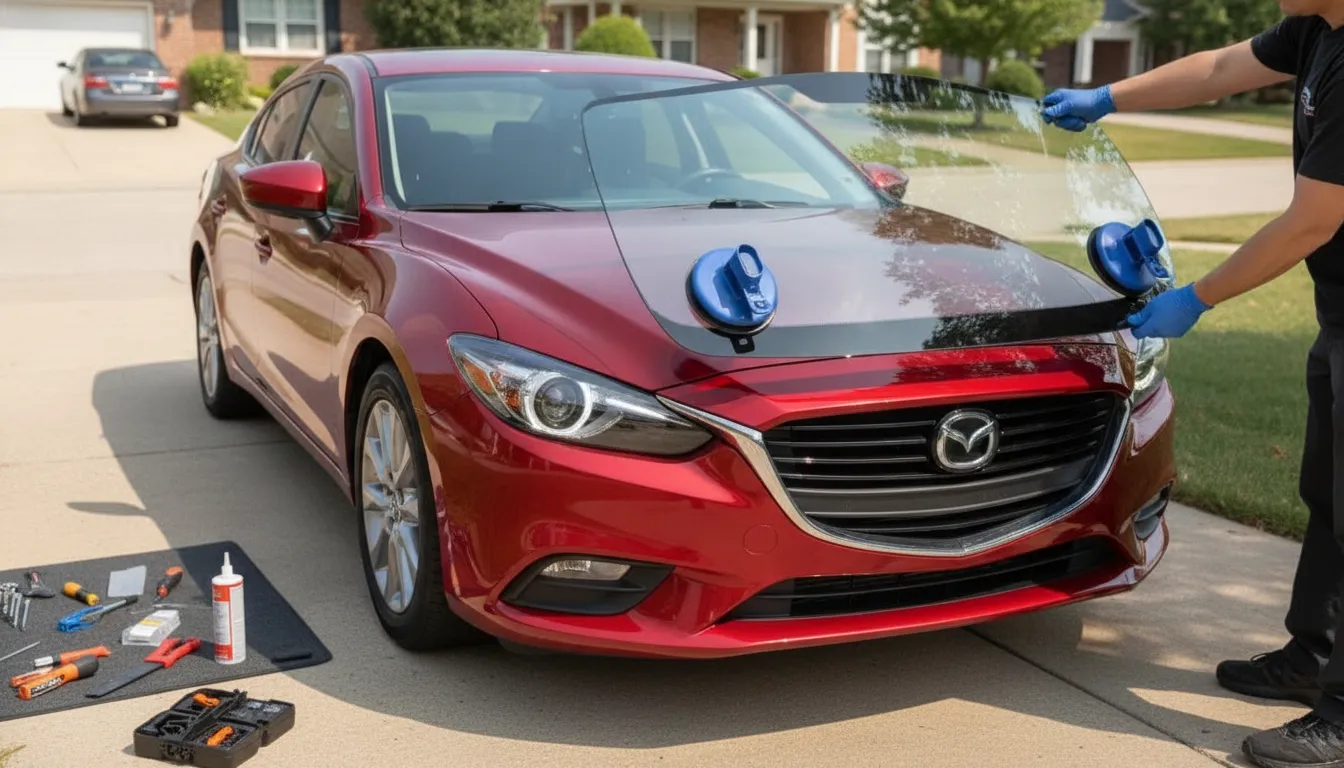
A windshield replacement is not automatically free just because a driver lives in a particular state. The amount you pay usually turns on three questions. Does comprehensive coverage apply? What deductible appears in the policy? Do state rules provide special treatment for qualifying glass claims?
When asking what states have free windshield replacement, think "zero deductible for an eligible claim," not universally free service. Florida law bars a comprehensive-policy deductible for covered windshield damage. Other states may require insurers to offer optional no-deductible glass coverage. Your policy, insurer approval, and the type of damage still matter.
For Kansas City drivers, especially those crossing between Kansas and Missouri, verify the policy and applicable state rule before scheduling work. First, separate a true $0 deductible from a quote that is simply free to receive. Then confirm how coverage applies to your specific windshield.
What Does Free Windshield Replacement Actually Mean?
In most insurance conversations, "free windshield replacement" means a qualifying covered claim has a $0 deductible, not that every driver receives replacement at no cost. Eligibility can depend on comprehensive coverage, the damage, the policy language, the insurer's requirements, and applicable state rules. A driver's state of residence alone does not create a universal promise of free service.
Windshield damage is commonly handled through comprehensive coverage rather than collision coverage. If the policy includes a glass or comprehensive deductible, the driver may still owe that amount. If the deductible is waived for a qualifying claim, the insurer may pay the covered replacement without a deductible payment. That is a zero-dollar result under specific conditions. It is not a guarantee that every replacement is free.
State rules can remove a deductible
Some state laws address how deductibles apply to covered windshield claims. For example. Florida's statute says that deductible provisions in a policy providing comprehensive or combined additional coverage do not apply to damage to the windshield of a covered motor vehicle. Read the current statutory language in Florida Statute 627.7288 before relying on a state-law exception.
Progressive identifies Florida, Kentucky, and South Carolina as states where insurers cannot apply a deductible to a covered windshield replacement claim when required coverage conditions are met. It describes these as "zero deductible" states and emphasizes that comprehensive coverage and other eligibility requirements still matter. This overview should not replace your policy or current state law. The details of a claim determine whether a waiver applies.
"Free" does not mean every cost disappears
A waived deductible does not mean every type of glass damage is covered. That comprehensive coverage is included in every policy, or that an insurer must approve every replacement. It also does not mean a glass company can independently waive a deductible that your policy requires. Your insurer may specify claim procedures, documentation, or provider requirements before authorizing work.
Before scheduling service, review the policy declarations page and ask the insurer whether the windshield damage qualifies. Whether replacement rather than repair is covered, and whether a deductible applies. Avision Auto Glass can help coordinate an insurance claim, but coverage remains dependent on the driver's policy and insurer. For Kansas City drivers, the safest answer is precise: a replacement may be $0 out of pocket when the claim qualifies and the deductible is waived. But "free" is never a universal assumption.
What States Have Free Windshield Replacement Under State Law?
No state makes every windshield replacement universally free for every driver. In practice, "free" usually means a qualifying comprehensive claim with no glass deductible, not a guarantee that the insurer or state will pay for any windshield damage. Coverage can still depend on the policy, the type of damage, claim requirements, and whether the insurer approves the replacement.
States with qualifying no-deductible treatment
Florida is the clearest example in the statute. Florida law says the deductible provisions of a policy providing comprehensive or combined additional coverage do not apply to damage to the windshield of a covered motor vehicle. You still need the applicable coverage, and the law addresses covered vehicle damage rather than promising replacement for every situation. Read the statute at the Florida Senate website.
Kentucky and South Carolina are also commonly treated as states where a qualifying covered windshield claim may receive no-deductible treatment. That does not mean every glass claim is automatically approved. The policy must provide the relevant coverage, and the insurer may still require specific claim steps, documentation, or use of an approved process. Confirm the details with the carrier before scheduling service.
States where no-deductible glass coverage is optional
Other states make a zero-deductible glass option available without requiring every policy to include it. Arizona requires insurers that offer comprehensive coverage to provide, at the insured's option, complete coverage for repair or replacement of damaged safety equipment without a deductible. Arizona's definition of safety equipment includes windshield, door, and window glass. Review the Arizona statute and check whether that option is included in your policy.
Minnesota similarly requires an automobile policy with comprehensive coverage to offer, at the insured's option. Complete coverage for repair or replacement of damaged safety glass without a deductible or minimum amount. The option is not the same as an automatic benefit for every policyholder. The Minnesota statute is the best place to verify the statutory language.
Connecticut, Massachusetts, and New York may also offer zero-deductible or no-deductible glass choices through the policy. In these states, the important distinction is that the option may be available, but the law does not necessarily require every insurer or policy to include it. Connecticut's option may carry an additional fee, while Massachusetts and New York allow insurers to offer zero-dollar comprehensive deductibles without making them mandatory for every driver.
How state glass rules commonly differ:
- Required no-deductible treatment: May prevent a deductible from applying to a qualifying covered windshield claim. Verify comprehensive coverage, claim eligibility, and current state law.
- Optional full-glass coverage: May let an insured choose repair or replacement without a deductible. Verify whether the option is on the policy and whether a fee applies.
- No special glass rule: Usually leaves coverage and deductible treatment to the policy. Verify the declarations page, insurer approval, and claim instructions.
What state law does not decide
Your state of residence alone does not establish that a windshield replacement will cost nothing. Comprehensive coverage is generally the part of an auto policy that addresses non-collision damage. Including many cracked-windshield claims, but drivers are not generally required by state law to carry comprehensive insurance. If you have no applicable coverage, a no-deductible rule cannot create coverage that your policy does not provide.
Before assuming replacement is free, review the declarations page and ask the insurer whether the claim qualifies. Whether a deductible applies, and whether any provider or approval requirements must be followed. A state rule can change the deductible treatment, but the policy and claim facts still determine whether the replacement is covered.
How Comprehensive Coverage and Deductibles Change the Answer
State law is only one part of the coverage question. Your auto policy matters just as much. Comprehensive coverage generally handles vehicle damage that does not result from a collision, including events such as hail, theft, vandalism, falling branches, and cracked windshields. The Cornell Legal Information Institute explains comprehensive coverage, but also notes that states generally do not require drivers to carry it. A driver may therefore live in a state with a windshield-related rule and still need to meet specific policy requirements before a claim is covered.
Check the deductible, not just the word "comprehensive"
A deductible is the amount you agree to pay toward a covered vehicle repair. Comprehensive coverage does not automatically mean your windshield replacement has a zero-dollar deductible. Your policy may have a general comprehensive deductible, a separate glass deductible, or a special glass provision. A zero-dollar glass deductible can remove the deductible payment for covered glass work, but only when the applicable coverage rules are satisfied.
For a smaller repair, compare the service quote with the deductible before filing a claim. If the repair costs less than the deductible, the insurer may pay nothing toward it. That does not mean the repair is unimportant. It means the deductible can affect whether using insurance makes financial sense. For a broader explanation of policy-specific glass coverage, see this guide to AAA windshield coverage.
Use the declarations page as a starting point
Your declarations page summarizes important policy details, including coverage types and deductible amounts. Review it for comprehensive coverage and any glass-specific language. Then read the relevant policy section or contact the insurer to confirm whether the damage qualifies. Whether approval is required, and whether the claim must be opened before work begins.
Insurers can also have their own procedures for glass claims. They may ask you to use a particular claims channel, obtain an estimate, or work with a provider in their network. Provider rules do not necessarily change your legal right to choose a qualified shop, but they can affect claim handling and your out-of-pocket responsibility. Ask whether a glass claim could affect your rate as well. The insurer is the source for that answer because rating rules and claim history treatment vary.
Repair and replacement may be treated differently
Do not assume that a policy treats every windshield service the same way. Some plans or insurers may waive a deductible for a qualifying repair while applying a deductible to replacement. Repair eligibility depends on the damage, its location, the vehicle, and safety considerations. If replacement is necessary, confirm the covered amount, deductible, authorization process, and any requirements for features such as windshield-mounted cameras or sensors. Coverage approval and safe installation are separate questions, and both deserve attention before scheduling service.
Are Kansas and Missouri Windshields Replaced for Free?
For Kansas City drivers, the answer depends on more than the state printed on a license or insurance card. A windshield replacement may have little or no out-of-pocket cost when a policy includes applicable comprehensive or glass coverage and the claim qualifies. But Kansas and Missouri residency alone does not make every replacement free, and Avision cannot waive a deductible independently of your policy or insurer.
Kansas protects your choice of glass provider
Kansas law addresses how insurers handle motor vehicle glass replacement. Under K.S.A. 40-2,155, an insurer generally cannot require an insured to use one particular glass provider when the insured chooses another qualified provider. The statute also says that when the insured selects a provider that is not listed by the insurer. The claim is subject to the deductible stated in the policy.
That distinction matters. Provider choice is not the same as a state-mandated zero deductible. If your Kansas policy has a glass-specific provision or a $0 comprehensive deductible, the claim may be handled differently than a policy with a standard deductible. Confirm the applicable amount and any claim requirements with your insurer before scheduling work.
If you need help understanding the process, Avision's guide explains how Kansas and Missouri drivers can file an auto glass claim. It is useful for organizing the information your insurer may request, but your policy documents and insurer remain the authority on coverage.
Missouri coverage is policy-specific
Missouri drivers should take the same careful approach, without assuming that the state provides a blanket windshield deductible waiver. Review the declarations page and policy language for comprehensive coverage, glass provisions, the deductible, and any requirements involving claim approval or an insurer's preferred-provider network. Then ask the insurer directly whether the proposed replacement is covered and what portion, if any, you would pay.
Avision serves the Kansas City metro on both sides of the state line, but service availability does not change the insurance decision. Its quote-based model accounts for the vehicle, glass features, ADAS needs, insurance coverage, deductible, location, and urgency. You can request a quote for windshield replacement service and use that information when discussing the claim with your carrier.
In short, Kansas gives drivers important provider-choice protection, while Missouri drivers should verify the policy-specific rules that apply to their claim. In either state, ask three questions before approving work: Is the loss covered, what deductible applies, and does the insurer require preapproval or specific documentation?
When Is Repair a Better Insurance Question Than Replacement?
A small chip or crack does not automatically mean you need a new windshield. Repair may be appropriate when the damage is limited, does not compromise the driver's view, and can be safely treated. However, repairability depends on the damage's location, depth, spread, and the vehicle's glass and safety-system requirements. A commonly cited six-inch guideline is only a starting point, not a universal legal or insurance rule. A technician should inspect the damage before you assume that repair, replacement, or a particular deductible will apply.
The insurance question can also change when repair is possible. Some insurers or policies may waive a deductible for a qualifying glass repair, while replacement may be subject to a comprehensive deductible or separate glass provisions. Those terms vary by insurer and policy. Comprehensive coverage commonly addresses non-collision damage, including broken glass, but having comprehensive coverage does not by itself guarantee a $0 out-of-pocket repair or replacement. Review the declarations page and confirm the claim requirements with your insurer before scheduling service.
For a practical explanation of the decision, see how to decide whether to repair or replace your windshield. The goal is not simply to choose the lower-cost option. A repair must restore a clear, structurally appropriate viewing area, and a replacement must be installed correctly for the vehicle and its equipment.
Check ADAS requirements before approving replacement
Many newer vehicles use a windshield-mounted camera or sensor for advanced driver assistance systems, such as lane-departure warnings or automatic emergency braking. Replacing the glass can change the position or optical path of that equipment, so recalibration may be required. Ask who will verify the system after installation and whether the needed recalibration is included in the service. Avision states that ADAS recalibration is included when needed after windshield replacement, but insurance responsibility still depends on your policy and insurer.
Plan around the service window
Avision reports that a typical windshield replacement takes one to two hours. The actual appointment timing can vary with the vehicle, glass features, ADAS requirements, location, and urgency. Avision uses quote-based pricing and can provide a free same-day quote, so provide the vehicle year, make, model, damage location, and insurance information when requesting an assessment. That gives the technician and insurer a better basis for determining whether repair or replacement is appropriate without treating a state rule or a six-inch figure as a guarantee.
What Should You Verify Before Scheduling Glass Service?
- Review the declarations page. Start with the coverage summary in your policy. Confirm whether comprehensive coverage is active for the vehicle and identify the glass or other-than-collision provisions that apply. Coverage can vary by state, policy type, and insurer, so do not rely on a general statement that windshield replacement is free.
- Check for a separate glass provision. Some policies include glass coverage or offer optional full-glass protection. That option is different from a state rule that automatically removes a deductible. Read the actual policy language and note any limits on the type of glass, vehicle, or claim that qualifies.
- Confirm the deductible. Write down the applicable comprehensive or glass deductible before authorizing work. Ask whether the deductible applies to repair, replacement, or both. If the policy is unclear, contact the insurer or insurance representative and request a specific answer for this windshield claim.
- Ask whether the insurer must approve the claim first. Verify the claim process, whether a claim number is required, and whether the insurer requires an inspection, estimate, or preauthorization. Also ask whether you may choose your own provider or must use an approved network. Avision can help coordinate a claim, but coverage and approval remain controlled by the policy and insurer.
- Confirm the repair-versus-replacement decision. Ask what service the damage appears to require and whether the insurer treats those services differently. A repair may follow a different deductible or approval process than a full replacement. If replacement is appropriate, review the windshield replacement service details and provide the vehicle identification information requested for an accurate quote.
- Flag ADAS requirements. Tell the provider if the vehicle has a forward-facing camera, lane-departure warning, automatic emergency braking, rain sensor, or another windshield-mounted system. Ask whether calibration or recalibration is needed after replacement and how it will be handled. This is a safety verification, not an optional paperwork detail.
- Request a complete quote. Confirm that the quote identifies the vehicle, glass type and features, molding or related parts, mobile-service location, calibration needs, insurance assumptions, and expected timing. Avision uses quote-based pricing because vehicle details, glass features, ADAS, insurance, location, and urgency can change the service requirements. Typical replacement time is one to two hours, but the actual appointment depends on the vehicle and scope.
- Keep claim documentation together. Save the policy page, insurer messages, claim number, photos of the damage, estimates, approval details, and final invoice. If you are in the Kansas City metro, Avision serves communities in both Kansas and Missouri. When you are ready to compare the documented service details with your coverage, request a free same-day quote.
Frequently Asked Questions
Which states have no deductible for windshield replacement?
Florida, Kentucky, and South Carolina are commonly associated with zero-deductible windshield claims when the driver has qualifying comprehensive or other-than-collision coverage. Florida law excludes covered windshield damage from the comprehensive deductible, Kentucky requires complete glass coverage for qualifying claims. And South Carolina's insurance department says the deductible is waived for private passenger vehicles. Confirm the current law, your policy, and claim eligibility before scheduling service.
Does living in a certain state make windshield replacement free?
No. State residence alone does not guarantee free replacement. Comprehensive coverage is generally optional, and the policy may still control the deductible, covered glass, claim process, and insurer requirements. Review your declarations page and ask your insurer whether the specific replacement is covered before assuming you will owe nothing.
In what states is it illegal to drive with a cracked windshield?
There is no single nationwide rule that makes every cracked windshield illegal. State laws and enforcement can depend on the crack's location, size, visibility, and effect on the driver's view. A crack in the required field of vision can create a safety or inspection issue, so check your state's current motor-vehicle rules and arrange an inspection promptly.
Who is the cheapest for windshield replacement?
There is no universally cheapest provider. The total quote can change with the vehicle's make, model, year, glass features, ADAS calibration needs, location, urgency, insurance coverage, and deductible. Compare a written quote with your deductible and confirm whether your insurer requires approval or a particular claim process.
Can windshield repair cost less than replacement?
Often, a repair may involve less work than replacing the entire windshield, but whether it is appropriate depends on the damage and vehicle. Ask a qualified technician to assess the chip or crack, and verify how your policy treats a repair claim. Some insurer policies may waive a deductible for a qualifying repair, but that benefit is policy-specific.
Ready to review your windshield replacement options?
If you are comparing insurance coverage, deductibles, and service choices in the Kansas City metro area. Avision Auto Glass can help you review the service details and request a quote. Insurance eligibility and deductible treatment remain specific to your policy, insurer, and circumstances. To get started, request a free same-day quote for mobile windshield replacement. Share your vehicle and glass-service details so the next step is based on your situation.