Lane Departure Warning: Calibration and Safety Guide
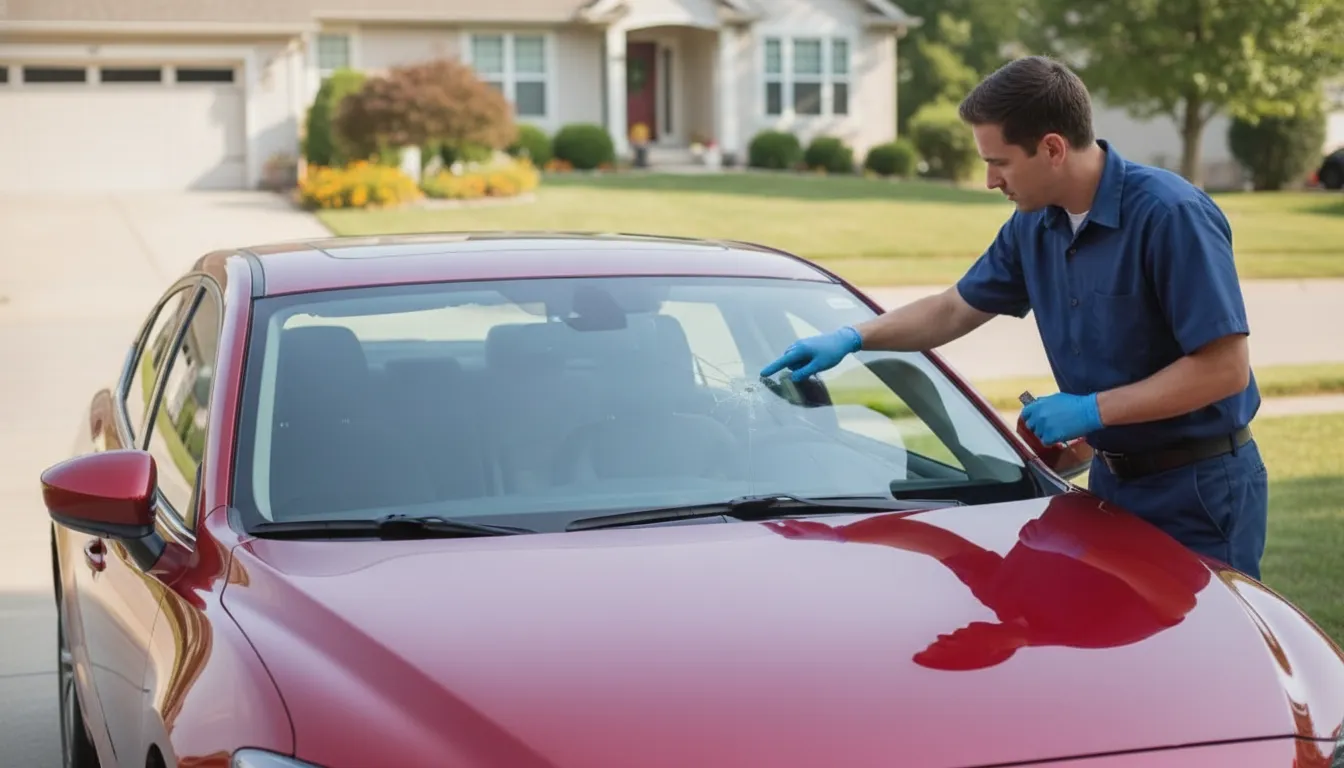
A windshield is more than a sheet of glass when a forward-facing camera sits behind it. That camera may support systems that watch lane markings, warn you when the vehicle drifts, or provide steering assistance, so glass service can affect more than visibility.
Lane departure warning monitors your vehicle's position and alerts you as it approaches or crosses lane markers. Lane keep assist can go further by providing steering input. After windshield replacement, vehicle-specific ADAS calibration helps these systems operate with the precision they require.
For Kansas City drivers, understanding the difference between an alert and an intervention makes it easier to respond when a warning appears. It also clarifies why camera placement, replacement glass, and calibration deserve attention before you get back on the road.
What Is Lane Departure Warning and How Does It Work?
Lane Departure Warning uses a forward-facing camera to monitor your vehicle's position between visible lane markings. When the system detects that you are approaching or crossing a lane boundary without an expected maneuver, it alerts you so you can correct course. It supports attentive driving, but it does not replace your judgment or control.
Lane Departure Warning, commonly called LDW, is an Advanced Driver-Assistance System that watches for unintended movement out of a marked lane. According to the National Highway Traffic Safety Administration, the technology monitors the vehicle's position and alerts the driver as the vehicle approaches or crosses lane markers.
How the camera and lane markings work together
In many vehicles, a camera mounted near the top of the windshield looks ahead at the roadway. Software analyzes visible lane lines and estimates where the vehicle sits within those boundaries. If the vehicle begins drifting toward a line, the system may issue a visual warning. An audible alert, or a vibration through the steering wheel or seat, depending on the vehicle's design.
LDW depends on what the camera can see. Faded or temporary construction markings, snow, heavy rain, glare, dirt, and road surfaces without clear lines can make lane detection more difficult. Sharp curves, narrow lanes, and other roadway conditions may also affect when the system warns, or whether it warns at all.
Why turn signals matter
Many systems use the turn signal as context. When you signal before changing lanes, the vehicle may treat the movement as intentional and suppress or reduce the warning. A missed signal can therefore produce an alert even when you meant to move over. The exact behavior varies by make, model, settings, and road conditions, so your owner's manual remains the best source for vehicle-specific details.
LDW is a warning system, not an autonomous driving feature. Some driver-assistance technologies warn about risk, while others actively intervene, and NHTSA advises owners to understand which features their vehicle has. Keep your attention on traffic, maintain steering control, and respond promptly when an alert appears. Correct windshield installation and any required ADAS calibration also help the camera work as intended after glass service.
Is Lane Departure Warning the Same as Lane Keep Assist?
Lane departure warning alerts you when your vehicle begins to drift toward or across lane markings. Lane keep assist can go a step further by providing limited steering input to help guide the vehicle back within the lane. Both systems support the driver, but neither replaces attentive driving or control of the vehicle.
No. Lane departure warning and lane keep assist are related Advanced Driver-Assistance Systems, or ADAS, but they perform different jobs. The exact features vary by vehicle, so check your owner's manual to confirm what your car is designed to do.
- Lane departure warning is primarily an alert. A forward-facing camera or other sensor monitors lane markings and the vehicle's position. If the system detects an unintended drift, it may provide a visual, audible, or steering-wheel warning. The driver remains responsible for correcting the movement.
- Lane keep assist provides limited steering support. It may apply gentle steering input when the vehicle starts moving toward a lane boundary. This is driving-control assistance, not autonomous driving. You still need to keep your hands on the wheel and make the driving decisions.
- The systems may rely on the same forward-facing camera. On vehicles equipped with both functions, the camera is commonly positioned behind the windshield and reads visible lane markings. That shared location is one reason windshield fitment and the vehicle-specific calibration process matter after glass service.
- Turn signals can affect the response. Many systems are designed to distinguish an intentional lane change from an unintended departure when the turn signal is used. However, behavior differs among manufacturers and models, so do not assume every vehicle responds in the same way.
Both systems have limits. Faded or missing lane markings, construction zones, rain, snow, glare, curves, and blocked camera views can reduce performance. NHTSA explains that some driver assistance technologies warn drivers, while others take action, making it important to understand the specific system in your vehicle. Learn more about driver assistance technologies from NHTSA.
| Feature. | Primary action. | Driver's role. |
|---|---|---|
| Lane departure warning. | Alerts about possible drift. | Correct the vehicle's path. |
| Lane keep assist. | May add limited steering input. | Keep hands on the wheel. |
| Shared camera. | Reads the road ahead. | Ask about calibration after glass service. |
If a lane warning or steering-assist feature behaves differently after windshield work, have the system checked. Do not treat the warning as a nuisance.
Proper calibration helps camera-based features operate with the precision your vehicle requires.
Why Can Windshield Replacement Affect Lane Departure Warning?
Windshield replacement can affect lane departure warning when the forward-facing camera's position, mounting bracket, or view changes. The replacement glass must match the vehicle's optical requirements, and some vehicles require a manufacturer-specified calibration procedure afterward. If the system behaves differently, treat the warning as a safety concern and have the vehicle inspected before relying on it.
Many lane departure warning systems use a camera mounted behind the windshield, often near the rearview mirror, to recognize lane markings and estimate the vehicle's position. The camera does not simply look through an interchangeable pane of glass. Its angle, distance from the glass, and relationship to the road ahead are part of the vehicle's design.
During replacement, even a small change can matter. A bracket may not sit in exactly the intended position, the glass may have a different fit or optical characteristics. Or adhesive and mounting work may leave the camera slightly out of alignment. These possibilities do not mean every vehicle automatically needs the same service after every replacement. The correct answer depends on the vehicle's make, model, equipment, and manufacturer procedure.
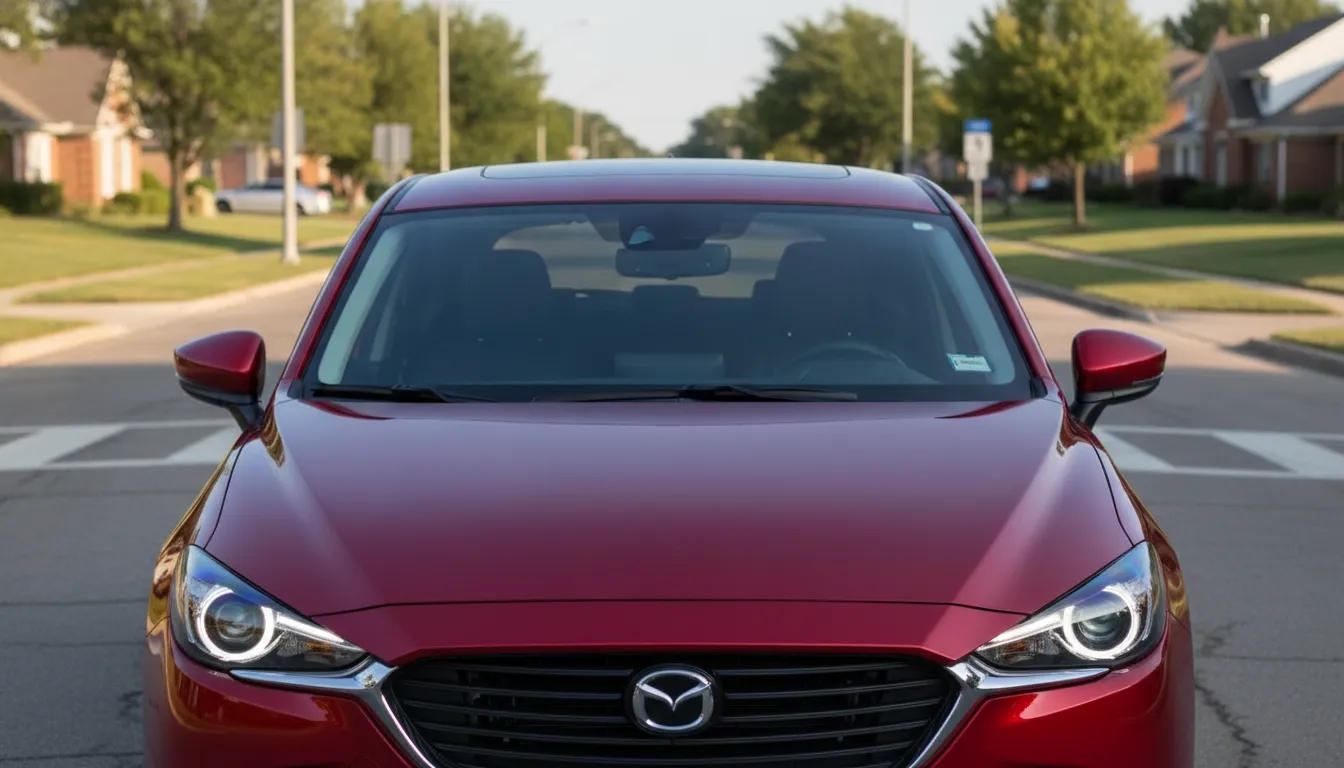
What the replacement process has to account for
A qualified glass provider should identify whether your vehicle has camera-based Advanced Driver-Assistance Systems, or ADAS, before beginning work. The technician can then check the camera bracket and windshield fit, review the vehicle-specific requirements, and determine whether calibration is called for. Avision Auto Glass technicians are trained for ADAS calibration after windshield replacement. And the company's service information explains that calibration supports correct lane departure warning and lane keep assist operation.
Calibration is intended to restore the camera and related lane-system measurements to the precision specified for that vehicle. It is not a generic reset, and it should not be assumed that one procedure fits every model. Ask which procedure your vehicle requires and whether the completion results will be documented.
Warning signs to take seriously
- The lane departure warning light remains on or a calibration message appears.
- The system stops recognizing lane markings, activates unusually often, or behaves differently than before service.
- The camera area looks obstructed, the windshield fit appears unusual, or the camera housing is loose.
If a warning appears after replacement, keep both hands available for active driving. Slow down when conditions allow, and do not rely on lane assistance to correct your path. Follow the vehicle owner's instructions and arrange an inspection with a qualified technician. NHTSA notes that some driver-assistance technologies warn drivers, while others take action, so these systems never replace attentive driving. NHTSA explains the difference between driver alerts and interventions.
What Happens During ADAS Calibration?
ADAS calibration is a vehicle-specific process that restores the camera or sensor alignment used by lane departure warning and lane keep assist. After windshield service, a technician identifies the required procedure, inspects the glass and camera area. Completes static or dynamic calibration as specified, and checks the system before returning the vehicle.
The exact process depends on the vehicle's make, model, year, equipment, and manufacturer instructions. A careful calibration is not a one-size-fits-all reset. It connects the glass service to the safety technology that helps your vehicle recognize lane markings.
Identify the vehicle and its required procedure
The technician begins by confirming the vehicle identity and reviewing its ADAS equipment. This may include a forward-facing camera mounted near the rearview mirror, along with lane departure warning or lane keep assist features. The vehicle's specific procedure determines whether calibration is needed and which measurements, tools, and road conditions apply.
Inspect the replacement glass and camera area
Before calibration, the technician checks that the windshield is the correct fit and that the camera's viewing area is clean and unobstructed. The camera mount, glass position, adhesive cure, and surrounding trim all matter. A camera cannot accurately interpret lane markings if it is not seated as designed or if the viewing path has a defect.
Complete the required static calibration
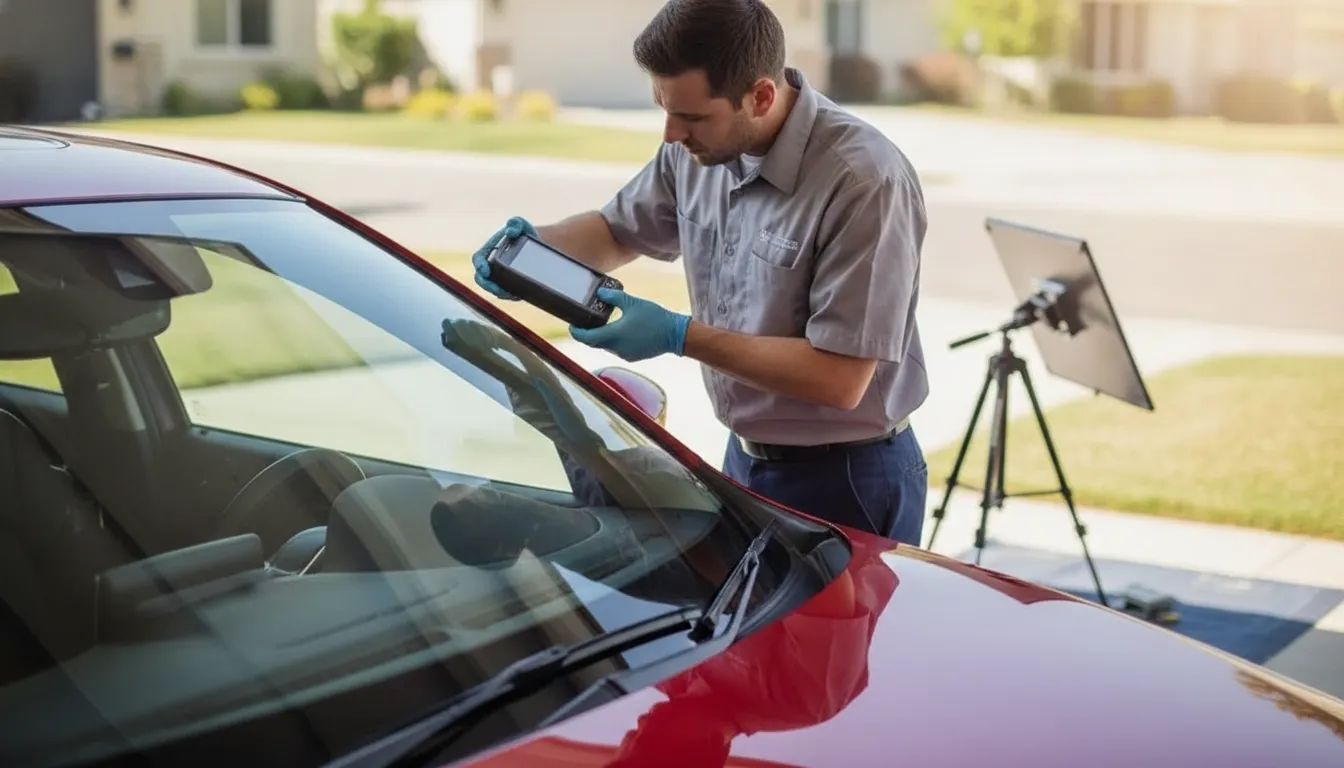
Static calibration takes place while the vehicle is stationary. Depending on the vehicle, the technician may position approved targets or equipment at precise distances and heights. Then use diagnostic tools to align the camera with the vehicle's centerline. The measurements must follow the vehicle-specific procedure rather than a generic setting.
Perform dynamic calibration when required
Some systems require a dynamic procedure, which uses a controlled drive under specified conditions so the camera can learn from real lane markings and roadway movement. Weather, lighting, traffic, road markings, and vehicle condition can affect whether a drive is suitable. The technician follows the applicable procedure and does not treat a warning light as proof that calibration is complete.
Run post-service checks
After calibration, the technician checks diagnostic results and confirms that warning messages or fault codes have been addressed. The goal is for lane departure warning and lane keep assist sensors to operate with the necessary precision after glass service. You can review Avision's auto glass replacement service to understand how the glass work and calibration fit together.
Avision Auto Glass technicians are trained for ADAS calibration after windshield replacement. If a lane departure warning behaves differently after service, ask what calibration procedure your vehicle requires and whether the final checks were completed before driving normally.
How Can Kansas City Drivers Protect ADAS Performance?
Keep the windshield area in front of the camera clear. Drive with extra care when weather or lane markings are difficult to read, and follow your owner's manual after glass service. If a warning appears after windshield work, ask whether the vehicle-specific ADAS system needs inspection or calibration before relying on lane assistance.
What should you keep clear around the camera?
Many Advanced Driver-Assistance Systems use a forward-facing camera positioned behind the windshield. Keep that viewing area clean inside and out. Remove frost, road film, water spots, and stickers that could obstruct or distort the camera's view. When you have a chip or crack near this area, choose the appropriate auto glass repair options rather than waiting for the damage to spread.
How do Kansas City weather and road changes affect lane systems?
Rain, snow, fog, and low-angle glare can make lane markings harder for both you and the camera to see. Temporary construction lines, worn paint, and shifting traffic patterns around Kansas City, Lenexa, Overland Park, or Olathe can also challenge the system. Treat lane departure warning as an aid, not a substitute for an attentive driver. Keep your hands ready, watch the road yourself, and be prepared for alerts to be delayed, unavailable, or less reliable in poor conditions.
What should you ask after windshield service?
Read your owner's manual for the vehicle's warning messages and calibration requirements. After windshield replacement, ask the glass provider whether the camera position, replacement glass, and manufacturer-specific procedure were checked. Do not assume every vehicle uses the same process. Avision technicians are trained for ADAS calibration, which supports correct lane-warning and lane-assist operation after applicable windshield work. You can also review this windshield replacement insurance guide while planning service. If a dashboard warning remains, document it and have the system evaluated before depending on it for lane support.
Why Choose Avision Auto Glass for ADAS Calibration?
For Kansas City drivers, Avision Auto Glass combines local experience with practical convenience. The family-owned team has served the area since 2006, offers mobile service, and uses trained technicians for ADAS calibration when your vehicle requires it. You also receive a written lifetime workmanship warranty for the duration of vehicle ownership.
Windshield work on a modern vehicle involves more than fitting new glass. If your vehicle uses a forward-facing camera or related driver-assistance equipment, the replacement process may need to be followed by a vehicle-specific calibration procedure. Avision technicians are trained for ADAS calibration, helping lane departure warning and lane keep assist systems operate correctly after glass service.
That local experience matters across the Kansas City metro. Mobile service brings the technician to your location, which can reduce downtime for an individual driver, a busy household, or a commercial operator managing several vehicles. Avision also provides fleet auto glass service for businesses that need dependable coordination and less time off the road.
Service built around your schedule
Avision offers free same-day quotes and next-day availability, subject to current technician capacity and scheduling. Before work begins, ask whether your vehicle's lane systems require calibration after the windshield replacement and what completion checks are included. Clear answers help you understand the service rather than treating calibration as an unexplained add-on.
Licensed and insured technicians provide another important point of confidence when safety-related vehicle equipment is involved. The team can explain the work in plain language, including whether your vehicle needs static calibration, dynamic calibration, or both. Requirements vary by vehicle, so the correct approach should follow the applicable manufacturer procedure.
Avision backs its work with a Lifetime Workmanship Warranty guaranteed in writing for as long as you own the vehicle. For more help understanding coverage and your options, review this windshield replacement insurance guide before scheduling.
Frequently Asked Questions
What does lane departure warning do?
Lane departure warning monitors your vehicle's position relative to lane markings and alerts you when the vehicle approaches or crosses them. It is a driver aid, not a substitute for attention or steering control. System behavior varies by vehicle, so review your owner's manual for the specific alerts and limits. NHTSA explains how these technologies work.
Is lane departure warning the same as lane keep assist?
No. Lane departure warning primarily alerts you to an unintended movement toward or across lane boundaries. Lane keep assist can intervene with driving control to help keep the vehicle within those boundaries. Both features may rely on forward-facing cameras, but their responses differ, and neither removes the driver's responsibility to guide the vehicle safely.
Does windshield replacement always require ADAS calibration?
Not every vehicle uses the same equipment or procedure, so calibration requirements are vehicle-specific. If your windshield includes a forward-facing camera or supports lane-related systems, replacement may affect sensor alignment. Ask your glass provider to identify the required manufacturer procedure and confirm whether calibration is needed before driving normally.
What should I do if the lane warning behaves differently after glass service?
Take the change seriously, especially if warnings appear unusually early, late, or not at all. Keep your attention on the road, avoid relying on the feature, and contact the glass provider or vehicle manufacturer for guidance. The camera area should also remain clean, and the vehicle-specific calibration process should be verified.
Does Avision Auto Glass perform ADAS calibration?
Yes. Avision technicians are trained for Advanced Driver-Assistance Systems calibration after windshield replacement. The process supports correct operation of lane departure warning and lane keep assist sensors when the vehicle requires it. Avision also provides mobile service in the Kansas City area. Technicians come to your location, which can help reduce downtime.
Get Started With Windshield and ADAS Service
If your windshield replacement may affect a lane departure warning camera, discussing the glass and calibration together can help you understand the next step for your vehicle. Request a free same-day quote for windshield service and ask about ADAS calibration. Share your vehicle details and what happened, and the Avision Auto Glass team can help you plan the appropriate service for driving around Kansas City.
Request a free same-day quote or call (913) 314-5720.