
Before arranging auto glass repair and replacement services, confirm whether your windshield has an electrical heating feature. A heated windshield can look much like ordinary glass, and a dashboard defrost control alone does not prove that the glass itself contains a heating element. Check the vehicle’s manual, controls, visible glass clues, and equipment information together before a replacement part is chosen.
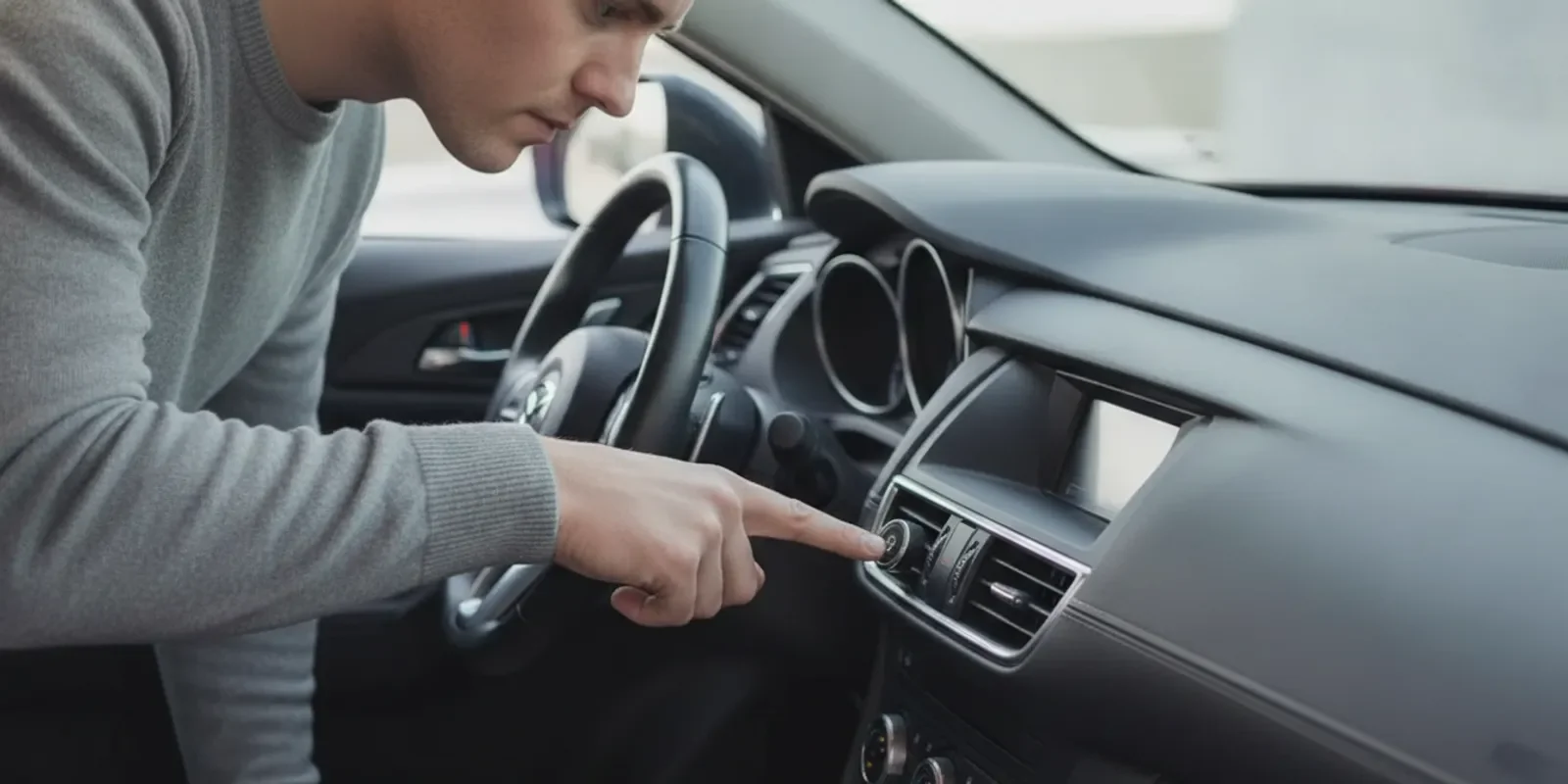
What does a heated windshield do?
An electrically heated windshield uses heating elements to help clear frost or condensation from the glass. The design varies by vehicle. Some systems heat a broad area; others concentrate heat near the bottom of the windshield where the wipers rest. The heating lines may be difficult to see, and in some vehicles the feature is activated through a dedicated control or a setting described in the owner’s manual.
This is different from the familiar front-defrost setting. In a conventional defrost system, the vehicle’s climate controls direct warm air toward the inside surface of the windshield. That airflow can clear fog or frost without electrical heating built into the glass. A windshield-shaped button, by itself, may simply operate the air vents. Follow the vehicle manual to identify what each control operates.
Some vehicles have a heated wiper-rest area rather than a fully heated windshield. The limited zone may help address ice around the parked wipers, but it is not the same specification as heating across the glass. Similarly, a rear-window defroster does not establish that the front windshield is heated. Describing the actual control or visible feature is more useful than guessing which system the vehicle has.
Heating is only one of several possible glass specifications. A windshield may also have a camera opening, rain sensor, antenna, acoustic layer, or head-up display compatibility. Each option can affect which replacement glass is appropriate. Avision’s windshield replacement information is a useful starting point for understanding that replacement glass must match the vehicle’s configuration.
How can you check whether your windshield has a heating element?
Use several clues and look for agreement between them. An owner’s manual or vehicle-specific equipment record is generally more useful than appearance alone. Try this sequence while the glass is intact and the vehicle is parked:
- Search the owner’s manual. Check the index and climate-control section for “heated windshield,” “windshield heating,” “wiper de-icer,” or “heated wiper area.” Read the full description. The manual may distinguish a heated zone from heating across most of the windshield, and may explain which switch activates it.
- Inspect the dashboard controls. Look for a separate windshield-heating or wiper-deicer control, then compare its symbol and instructions with the manual. A standard front-defrost icon is not sufficient evidence of electrical glass heating. If the control is shared with another setting, use the manual’s description rather than interpreting the icon on its own.
- Look at the glass without touching or dismantling anything. In some designs, fine lines or a grid can be visible at an angle, or an electrical connection may be apparent near a windshield edge or wiper-rest area. Lighting, tint, dirt, and the element design can make these details hard to see. Not seeing lines does not prove that the windshield lacks a heating feature.
- Check vehicle documents. A window sticker, build sheet, or equipment list may identify a heated windshield or wiper de-icer. Verify that the document belongs to the exact vehicle. A trim name alone may not settle the question because equipment can differ among configurations.
- Ask for a vehicle-specific lookup. A provider can use the VIN together with year, make, model, and trim to check parts and equipment information. The VIN is an important clue, but you should still tell the provider about the controls and features you can see, especially if the vehicle has been modified or its glass has been replaced before.
Do not remove trim, pull at wiring, probe connectors, or use an improvised electrical test. These actions can damage components and are unnecessary for an initial identification. If the glass is cracked, do not press on the damaged area to search for lines. You can share safely taken photos of the dashboard controls and visible glass markings. For smaller damage, Avision’s chip repair information can help you ask whether repair or replacement should be considered.
Which clues are strong, and which can mislead?
A clear statement in the owner’s manual, paired with a matching control and vehicle-specific equipment information, is stronger evidence than one clue on its own. A visible connector may suggest an electrical feature, but it does not show whether the windshield is heated across its full area or only near the wipers. Likewise, a faint grid can be difficult to distinguish from reflections, surface marks, or other glass features.
Consider a common example: a driver sees a windshield icon on the climate panel and assumes the windshield is electrically heated. The manual then explains that the control directs warm cabin air to the glass. In this case, the icon signals defrost, not a heating element in the windshield. The reverse can also happen: a driver sees no obvious wires and concludes there is no heating feature, although the design is difficult to see from inside the car.
Another possible mix-up is treating a heated wiper zone as a full heated windshield. If the manual names a wiper de-icer, report that exact wording. Do not ask for “a heated windshield” as if the two designs were interchangeable. A provider can verify which part and connections correspond to the vehicle rather than relying on a broad label.
Evidence can also conflict. For example, the manual may describe a feature that is not apparent on the glass, or a control may be present while the vehicle’s equipment record is unclear. Record the mismatch and ask for a parts check. A feature might not operate, the glass could have been replaced previously, or a control may have another function; none of these possibilities should be treated as confirmed without checking. Avoid testing a damaged windshield just to resolve the discrepancy.
What information should you gather before requesting replacement glass?
A concise set of details helps a glass provider check the configuration and reduces avoidable back-and-forth. Before you call or send a request, gather the following:
- Vehicle year, make, model, and trim, if known.
- The VIN, copied carefully from the vehicle or its registration documents.
- The exact wording from the manual for any heated-glass or wiper-deicer function.
- Whether there is a dedicated control and where it is located; do not infer its function from the symbol alone.
- Any other known windshield features, such as a camera, rain sensor, antenna, or head-up display.
- Where the damage is, whether it affects the driver’s view, and whether it appears to be spreading.
- Photos of the controls, glass edge, and any visible markings or connections, taken without touching damaged glass or removing trim.
Keep the facts separate from your conclusions. For instance, write “manual says wiper de-icer; button is below climate controls; faint lines near the lower edge” rather than “definitely a heated windshield.” This gives the provider useful evidence and makes uncertainty explicit. Share the VIN through the provider’s approved contact method and avoid including unrelated personal information in photos.
If you are arranging service from the Kansas City area, you can include your location when you contact Avision. Its pages for Overland Park, Olathe, and Lenexa provide local service information. The vehicle details still matter in each location; geography does not determine which glass specification is correct.
What should you ask the glass provider?
When requesting a quote, state that you suspect an electrical heating feature and explain the evidence behind that suspicion. Then ask for verification before the replacement glass is selected. Questions like these make the discussion concrete:
- Can you verify whether this vehicle has a heated windshield, a heated wiper-rest area, or neither?
- Which vehicle details or parts information are you using to confirm the glass configuration?
- Does the replacement glass match the heating feature and the other options on this vehicle?
- Are there visible electrical connections or related components that should be checked?
- Will the quote or service discussion identify the glass configuration being supplied?
- Does the vehicle’s camera or other equipment require any additional steps after replacement?
- What should I do with the vehicle while waiting, given the damage location and condition?
The Independent Glass Association’s windshield repair and replacement overview advises seeking skilled auto glass professionals for this work. Use that general guidance alongside a vehicle-specific parts check. Do not assume that glass with the same shape has the same electrical features, or that a generic description in a quote confirms every option.
If a quote does not make the configuration clear, ask the provider to restate it before approving the work. Tell them whether the manual indicates full windshield heating or a limited wiper zone, and share any uncertain clues. You can also ask how they will handle any other equipment noted on the vehicle. Avision’s auto glass replacement information offers another place to review replacement service details.
Why does correct identification matter beyond the heating feature?
A replacement that lacks a feature used by the vehicle may not provide the same function as the original. The opposite mistake can create confusion too: if you assume the windshield is heated when it is not, a normal defrost system may seem faulty or the wrong part may be requested. The goal is to match the vehicle’s actual configuration, not simply to find glass that fits its outline.
Other windshield equipment should be identified separately. A camera or sensor is not proof of a heating element, and a heating feature does not establish whether camera-related procedures are needed. List each known feature and let the provider assess what applies. Avision’s windshield repair service information can help drivers review a repair-related option when they are unsure what kind of glass service to ask about.
For a vehicle owner, a short written checklist is usually enough: vehicle details, VIN, manual wording, control description, other visible equipment, and damage location. Keep the record with your quote or service notes. If you later speak with another provider, you can repeat the same observations without having to rely on memory or turn a tentative guess into a definite claim.
How can fleet operators avoid repeating the same identification work?
Fleet managers can make equipment checks more consistent by storing basic glass details with each vehicle’s record. Include year, make, model, trim, VIN, and any confirmed windshield features. If the vehicle has a heated windshield or wiper de-icer, record the manual’s terminology and, when available, the relevant equipment documentation. Keep uncertain items marked as “to verify” rather than presenting them as confirmed.
When a driver reports damage, ask them for the vehicle ID, damage location, and observations that can be gathered safely: the control description, manual wording if available, and photos of visible clues. Have the driver avoid probing wiring or testing damaged glass. The fleet contact can then provide a consistent evidence packet to the glass provider, rather than sending an incomplete guess from each vehicle.
Do not assume that two units of the same model have matching glass equipment. Trim, build configuration, and prior replacements can differ. Confirm each vehicle by its own VIN and documented features. Avision provides fleet auto glass service information for businesses managing vehicle glass needs; include the fleet’s identification details when discussing a service request.
A simple fleet checklist can include four status fields: “confirmed heated windshield,” “confirmed heated wiper zone,” “no heating feature found,” or “not yet verified.” Add the source of the information, such as manual or equipment record, and the date it was checked. This does not replace a parts lookup, but it helps managers distinguish documented facts from a driver’s initial impression when scheduling auto glass service.
What if you cannot confirm the heating feature?
It is fine not to know. Tell the provider that you are uncertain, share the VIN and the clues you found, and ask that the equipment be checked before glass is selected. Avoid ordering by appearance alone or insisting on a part based only on a dashboard symbol. If the evidence conflicts, explain the conflict rather than choosing one clue and ignoring the rest.
Damage and visibility are separate concerns from feature identification. If damage affects your view or you are unsure whether the vehicle is safe to drive, seek guidance from a qualified provider and use caution. Do not press on a crack or attempt a heating test. Avision’s Kansas City auto glass information and Liberty service page offer local context for drivers in those areas; share your vehicle configuration when asking about service.
Request a quote or call (913) 314-5720
Frequently asked questions
Can I tell by looking through the windshield?
Sometimes, but appearance alone is not conclusive. Fine lines or connections may be visible in some designs, while others are hard to see. Check the manual and vehicle equipment information, and tell the provider what you observed.
Does a front defrost button mean the windshield itself is heated?
No. A front-defrost control often directs warm cabin air toward the glass. Check the manual for a separate electrical heating feature or heated wiper-rest zone before identifying the windshield as heated.
Can the VIN confirm which replacement windshield I need?
The VIN helps a provider look up vehicle-specific parts and equipment. Share it with the year, make, model, trim, and any known glass options, then ask the provider to confirm the exact configuration before the part is chosen.
Is a heated wiper area the same as a heated windshield?
No. A heated wiper-rest area heats a limited zone, while a heated windshield may use a different element layout. Use the terminology in the owner’s manual and ask the provider to identify the matching glass.
Should I test the heating element if the glass is cracked?
No. Do not probe the glass, pull at wiring, or make an improvised electrical connection. Describe the damage and suspected feature to a glass professional, and use vehicle controls only as the manual directs during normal operation.
What is the safest next step?
Check the owner’s manual, controls, visible clues, and vehicle equipment information together. Send the provider the VIN and your observations, and ask them to verify whether the vehicle has a heated windshield, a heated wiper zone, or neither before replacement glass is selected.
