
Semi Truck Windshield Replacement Near Me: Fleet Guide
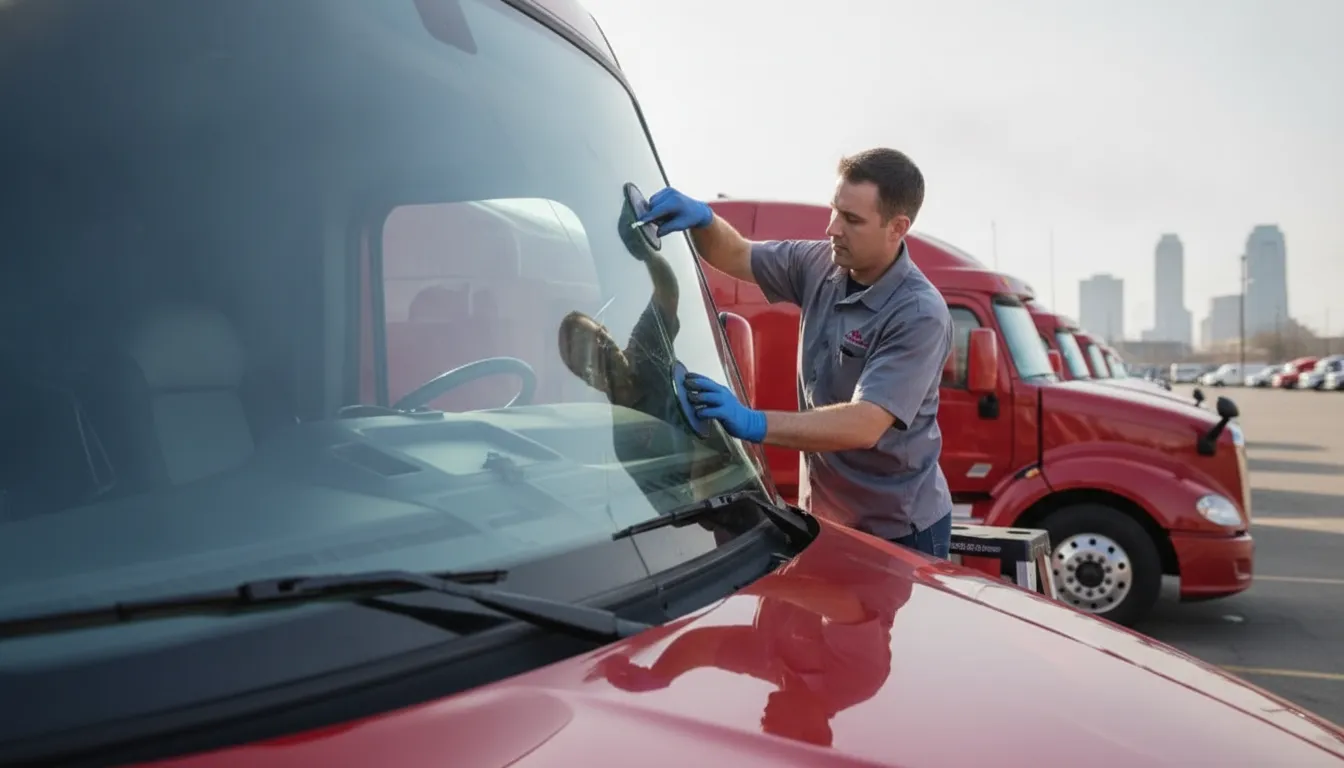
A cracked windshield can disrupt more than one truck. Dispatchers and fleet managers must coordinate vehicle identification and driver routes. They must also plan safe work space and return-to-service timing across the Kansas City metro.
When you need semi truck windshield replacement near me, group affected vehicles by location and availability. Provide each truck's details and damage information. Include known ADAS requirements. Mobile scheduling can reduce vehicle shuttling, but each truck still needs a safe installation window and post-installation planning.
Avision Auto Glass serves fleets across Missouri and Kansas. Its mobile service reaches fleet lots, corporate locations, and job sites. The steps below create a predictable plan. First, consider the cost of handling trucks one at a time.
Why Fleet Scheduling Matters When You Need Semi Truck Windshield Replacement Near Me
Answer: Fleet scheduling matters because replacement affects more than one driver. Dispatchers account for vehicle locations and route commitments. They also plan safe work space and each truck's unavailable time. These details can reduce disruption and clarify return-to-service decisions.
An individual driver can arrange service around one vehicle. A fleet manager must see the broader operating picture. Trucks may have different routes or terminals. Some may have fixed job-site commitments. Separate shop visits can create extra coordination and driver shuttling.
Coordinate the calendar, not just the repair
Identify vehicles needing attention and where each will be idle. Note when each truck can leave dispatch. Grouping vehicles at a safe, accessible fleet lot, corporate lot, or job site may simplify the plan. It gives the service team one worksite instead of requiring transportation for each truck.
The goal is not to rush an installation. Place the work inside a realistic operating window. Leave room for preparation, replacement, post-installation time, and a final check. A typical replacement may take one to two hours. This is an estimate, not a promise.
Why Kansas City coverage changes the logistics
Avision Auto Glass is a family-owned mobile provider serving the Kansas City metropolitan area across Missouri and Kansas. A mobile appointment can align the service location with a truck's schedule. Equipped units go to homes, offices, fleet parking locations, and job sites. Dispatchers can plan around idle trucks instead of sending them to a shop.
Fleet managers prioritize minimal downtime, predictable scheduling, safety compliance, and consistent service records. Those needs are different from finding the closest shop. When comparing options for semi truck windshield replacement near me, ask whether the provider will discuss the vehicle list, location, access, and service windows before booking.
For multi-vehicle coordination, review Avision's Kansas City fleet glass service information. A clear dispatch calendar helps minimize disruption and track each truck's return-to-service needs.
What Details Should You Gather Before Scheduling a Semi Windshield Replacement?
Answer: Gather the truck's year, make, model, damage location, glass features, ADAS or camera details, service location, access conditions, urgency, insurance information, and route constraints. These details help the dispatcher confirm the right glass and plan a safe, efficient appointment.
A complete intake reduces back-and-forth when several vehicles need attention. Keep information together for each unit. Avision uses quote-based pricing. Vehicle and service details help determine an accurate quote without relying on a generic estimate.
- Vehicle identification: Record the year, make, model, unit number, VIN if available, and whether the truck has a single or specialized windshield configuration. Vehicle-specific information helps match OEM or equivalent quality glass to the vehicle's specifications. See these vehicle-specific replacement details for more context.
- Damage description: Note whether the glass is cracked, chipped, shattered, leaking, or obstructing visibility. Include the damage's approximate location, size, and whether it is in the driver's primary viewing area. Clear photos from inside and outside the cab can help the team review the request before scheduling.
- Glass features: Identify rain sensors, tinting, antennas, heating elements, special molding, or other equipment connected to the glass. If you are unsure, photograph the windshield and dashboard area instead of guessing.
- ADAS and camera details: Check for a forward-facing camera, lane-departure system, collision warning sensor, or other driver-assistance equipment mounted near the windshield. ADAS recalibration may be needed, with alignment to manufacturer specifications, so mention every visible camera or sensor during intake.
- Service location and access: Provide the exact address, parking area, contact person, and any gate, height, access, lighting, or surface restrictions. Tell the dispatcher whether the truck will be at a fleet lot, job site, terminal, or another location.
- Urgency and route timing: Explain why the replacement is urgent, when the truck must return to service, and whether it is currently safe to move. Share dispatch windows, driver hours, planned departures, and any route that cannot be changed. Do not dispatch a vehicle if its condition creates a safety concern.
- Insurance and billing: Have the insurance carrier, policy information, deductible details if relevant, and billing contact ready. Confirm whether the request is for one unit or multiple vehicles.
Before submitting the request, identify other trucks at the same location and time. Grouping appointments can simplify coordination. Each vehicle still needs its own identification, damage, and glass-feature details. A clear intake helps the scheduling team discuss timing, location, and quote-based service options.
Scheduling focus: Match each planning question to the person who can answer it.
- Vehicle details: Dispatcher or driver confirms unit number, year, make, model, glass features, and damage.
- Site details: Fleet contact confirms address, access, parking, lighting, and safe workspace.
- Route details: Operations lead confirms idle windows, fixed departures, and post-installation hold time.
- Service details: Glass provider confirms availability, vehicle fit, installation needs, and quote inputs.
How Can You Schedule Several Trucks at One Kansas City Location?
Answer: Schedule several semis as one coordinated mobile service visit. Group vehicles at the same site, assign workable appointment windows, prepare access and workspace, and confirm each truck return to service.
Group the vehicles by location
Start with the address where each truck will be available. A Kansas City fleet lot, corporate lot, office, or job site may be more efficient than separate shop visits. List every vehicle that can be present there. Include its unit number, make, model, year, damage, and known driver-assistance requirements. If trucks are split between Missouri and Kansas, organize each location as its own service group.
Build appointment windows around dispatch
Mark which trucks are idle and which have fixed departure times. Note which can remain parked for installation and post-service time. Give the service team a practical sequence. Do not promise that every truck will finish at the same time. Avision documents early morning starts at 7:00 AM. This may help protect daytime routes when the timing fits. Saturday availability may help weekday businesses, but confirm it for your request.
Coordinate keys, drivers, and site access
Assign one contact person to provide keys and identify each unit. This person can answer access questions. Confirm gate hours, security procedures, driver presence, parking restrictions, and staging areas. Place vehicles in schedule order. Make sure the team can reach each windshield without moving equipment or trailers.
Reserve a safe, workable space
Choose a level area away from traffic, loading operations, falling debris, and moving equipment. Keep enough room around each truck for technicians and mobile equipment. Tell the provider about unusual site conditions. Mobile units can work at fleet parking locations, corporate lots, and job sites while vehicles are idle. The site must still support safe access and installation.
Protect the route commitments
Share the latest dispatch deadlines. Identify mission-critical units. Treat replacement duration as a planning estimate, not a guarantee. If a vehicle has an urgent safety concern, separate it from routine scheduling. Ask how it should be handled before dispatch. Review Avision's fleet scheduling support options.
Confirm the post-service plan
Before the visit, decide where each truck will remain after installation. Assign someone to verify it before release. Keep time for return-to-service guidance, paperwork, and follow-up. Confirm the completed unit, service location, and next dispatch time with the fleet contact. Do not send out a truck before the post-service plan is complete.
When Should a Damaged Semi Windshield Stay Out of Service?
Answer: A damaged semi windshield should stay out of service if it may affect the driver's view, wiper-cleared vision area, light transmission, or safe operation. The result depends on the damage, vehicle, loading conditions, and applicable requirements. Have qualified personnel inspect it before deciding whether the truck can return to service.
Do not judge the damage only from outside the cab. A chip or crack in a critical viewing area can worsen with vibration, temperature changes, road impacts, or cab flex. Keep the truck parked in a safe location if the damage is spreading or sits in the driver's line of sight. Do the same if it interferes with wiper coverage or creates glare and distortion. Request an inspection.
Check visibility and obstruction first
Visibility is the practical starting point. Look from the driver's normal seating position. Note whether damage, haze, tint, or a sticker affects the road view or wiper-cleared area. NHTSA explains that vision-area requirements must be met under all loading conditions. The inspection should reflect how the truck operates, not just how it looks empty.
FMCSA guidance also addresses commercial-vehicle windshield condition, coloring, obstructions, and decals or stickers. Its safety-planning material points to 49 CFR 393.60 for the full requirements. These rules are useful references, but a blog checklist cannot determine compliance for a particular truck or operating situation.
Consider tint, damage location, and changing conditions
Do not add tint or rely on a darkened area to hide damage. FMCSA says windshield and side-window tinting may not restrict light transmission below 70 percent of normal. Damage near the edge, mounting area, sensor area, or a broad viewing zone may also require a closer technical assessment than a simple visual check. If a vehicle has camera or sensor equipment associated with the glass, include that information when arranging an inspection.
A responsible dispatcher should record the truck number, current location, and damage description. Take photographs when safe. Note whether the vehicle is loaded or scheduled for a route. Then ask a qualified glass technician and responsible safety personnel to evaluate it. Their assessment can determine whether repair, replacement, or additional inspection is appropriate. Avision identifies its technicians as licensed and insured. Its replacement service includes ADAS recalibration when needed, with glass aligned to manufacturer specifications: review vehicle-specific replacement details.
There is no universal drive-or-do-not-drive rule that can replace an inspection. When visibility is compromised or the damage is worsening, keeping the semi out of service until it is evaluated is the safer operational choice. For an urgent scheduling request, see emergency commercial truck replacement.
How Can Mobile Replacement Reduce Fleet Downtime Without Rushing?
Answer: Mobile replacement can reduce downtime by fitting the installation into a planned route window. It brings the work to a safe fleet location and keeps post-installation time on the dispatch calendar. The goal is not to hurry the technician. Remove avoidable travel, waiting, and scheduling gaps while allowing the work to be handled properly.
Start by identifying when the truck will be parked and where the technician can work without moving the vehicle during the appointment. A fleet lot, corporate lot, or job site may be practical when it provides adequate space, stable ground, and a safe separation from traffic. Confirm the location, access instructions, lighting, weather exposure, and the person who can release the vehicle before the appointment is set.
Build the appointment around the route
Dispatchers should schedule the replacement during a predictable idle period, such as an overnight return, a planned maintenance window, or a gap between assigned loads. Early morning service starts at 7:00 AM, and Saturday availability may help businesses that operate Monday through Friday. Availability is not the same as a guarantee, so confirm the appointment window before changing a driver's route or delivery commitment.
When several trucks are parked at the same location, group the work whenever the schedule and workspace allow it. This can reduce the aggregate disruption associated with sending drivers to separate shops. Give the provider a vehicle list and enough time to review each truck's details, damage, and any known glass or calibration requirements. That preparation helps avoid a preventable delay without turning the installation into a race.
Protect the installation and return-to-service window
A typical windshield replacement may take one to two hours, but that is an estimate, not a promise for every truck or fleet. Vehicle configuration, access, damage, glass requirements, and other job conditions can affect the schedule. Leave room for the technician to complete the removal, installation, inspection, and any required steps before dispatch.
Plan post-installation downtime before the appointment. Keep the truck parked for the period the technician recommends, and do not assign a load that requires immediate departure. The responsible fleet manager or safety lead should confirm when the vehicle is ready to return to service. This protects the quality of the work and prevents a rushed handoff from creating a larger operational problem.
If a damaged truck cannot safely wait for a planned route window, review the options in emergency commercial truck replacement. For a planned appointment, tell Avision when the truck is parked and request a scheduling review. Free same-day quotes are available, with service as soon as the next day when scheduling allows.
What Service Records Should a Fleet Keep After Replacement?
A consistent record turns a completed glass job into useful fleet history. It helps a dispatcher see what was done, identify the truck quickly during a follow-up. And schedule future work without asking a driver to reconstruct the details from memory. Treat the record as part of returning the vehicle to service, not as paperwork that can be discarded once the windshield is installed.
Capture the basic service facts
Start with the service date, approximate start and finish time, and the exact location where the work occurred. A fleet lot, corporate parking area, job site, or other worksite can matter when reviewing access conditions or arranging the next visit. Record the vehicle identification number or your internal unit number, along with the make, model, year, and any other identifier your dispatch team uses.
Describe the service performed in plain language. Note whether the technician replaced a windshield, repaired a chip, or completed another glass service. Include the glass or other parts used, including any relevant part identification information available on the invoice or work order. If the vehicle has driver-assistance features connected to the windshield, keep a note of any required inspection, alignment, or recalibration documented with the job. Avision matches OEM or equivalent quality glass to vehicle specifications and provides ADAS recalibration when needed, so retaining those details can help with later questions about the installation.
Keep technician, warranty, and photo documentation together
Save the technician's name or identification, the work order, and the final invoice in the same vehicle record. It is also useful to keep before-and-after photos, especially when the original damage affected visibility or when the vehicle was serviced at a busy fleet location. Photos can help the dispatcher compare the documented condition with a later report and give a service provider context before a follow-up visit.
Keep the written warranty documentation with the service record rather than relying on a general note that the work was guaranteed. Avision documents a lifetime workmanship warranty for the duration of vehicle ownership. The warranty terms and the work order should remain easy to find, particularly when a truck changes drivers, moves between yards, or is assigned to a different coordinator. Avision also identifies its technicians as licensed and insured, which can be useful service-provider information to retain with the completed job file.
Make the record useful for the next dispatch decision
Use the completed record to update the truck's maintenance history and flag any follow-up item. For example, note whether the vehicle needs a post-installation check before dispatch, whether a supervisor needs to review photos, or whether a recurring damage pattern deserves attention. A shared digital folder or fleet-management system works well when every entry uses the same labels and vehicle IDs.
For a practical preventive-maintenance reference, review this fleet glass maintenance checklist. When a record shows that another truck needs replacement, you can request a quote for the next vehicle with the unit details and location ready.
Frequently Asked Questions
How do I schedule semi truck windshield replacement near me for several vehicles?
Start with each truck's unit number, location, windshield damage, preferred service window, and any ADAS requirements. Group vehicles parked at the same Kansas City-area location, then coordinate a safe work space and idle time with the mobile technician. This approach can reduce driver shuttling and simplify return-to-service planning.
Can a mobile technician replace a semi windshield at a fleet lot?
Mobile service may be scheduled at fleet parking locations, corporate lots, or job sites, so vehicles do not necessarily need to be transported to a shop. Confirm access, lighting, parking clearance, and the truck's availability when requesting the appointment. Avision serves the Kansas City metro across Missouri and Kansas.
How long should I allow for a semi truck windshield replacement?
A typical windshield replacement may take one to two hours, but that is an estimate rather than a promise for every truck. Build additional time into the dispatch plan for vehicle preparation, installation requirements, curing or post-installation instructions, and any needed ADAS work.
What should I do if the windshield damage affects driver visibility?
Have the driver follow your safety policy and keep the truck out of service when the damage creates an unsafe visibility concern. Commercial-vehicle windshield requirements address condition, coloring, obstructions, and decals under 49 CFR 393.60, according to the FMCSA (FMCSA guidance). A technician and responsible safety personnel should evaluate the vehicle rather than relying on an online clearance.
Ready to Plan Your Fleet Glass Service?
A clear service plan can help your dispatcher coordinate vehicle details, route windows, and a safe workspace before replacement begins. For semi truck windshield replacement near me across the Kansas City metro, request a free same-day quote for a semi windshield replacement or coordinated fleet service. Share the number of trucks, their locations, and your preferred scheduling window so the team can review the next step with you.
