
Call (913) 314-5720 for a free same-day quote
A small rock chip stays repairable only when the open break remains free of dirt, water, and adhesive residue. Dirt, washer fluid, and rain can sit in the pit before a technician arrives, and a hard wash or a scraper can disturb a fresh resin fill afterward. Drivers across Kansas City, Olathe, and Overland Park ask how to keep windshield repair area clean without making the damage worse.
The practical answer is straightforward and worth following. Cover a fresh chip with clear packing tape, skip the car wash, and leave wipers off that spot until a technician fills it. After service, keep water, blades, and scrapers off the repair for the rest of the day. Avision Auto Glass sends a mobile technician to your home or work, usually next day, and most chip repairs take 30 to 60 minutes.
How to Keep Windshield Repair Area Clean Before Resin
Resin has to reach the open break, and dirt blocks that path. A rock chip is a small pit with tiny cracks in the outer layer of glass. Air in those cracks looks dark from the driver's seat, and a professional repair replaces that air with resin so the break stops spreading. Our windshield repair page explains when a chip smaller than a quarter, away from the glass edge, is the usual repair case.
If grit, wax, or washer fluid sits in the pit, the resin cannot wet the glass the same way, and the fill can leave dark voids. Those voids still catch light at night, and an unfilled crack tip can continue to spread under heat and highway vibration. The Repair of Laminated Automotive Glass Standard (ANSI/AGSC/NWRD/ROLAGS 002-2022) says the technician must remove moisture, dirt, foreign matter, and contamination from the damaged area before resin goes in. A pit packed with grit or washer fluid is harder to clear, and the fill can leave dark voids.
Kansas City weather makes this harder. Summer heat bakes road film onto the glass, while winter road salt and freeze-thaw cycles push water into an open chip. A clean repair area is not a cosmetic preference. It is the condition that lets repair resin bond through Kansas City heat, road vibration, and the freeze-thaw cycle that follows a winter storm.
You do not need to polish the whole windshield, but the damaged spot should be free of loose dirt and standing water before the appointment. The technician handles the resin fill, the cure cycle, and the final leveling of excess resin.
How Should You Protect the Chip Before the Appointment?
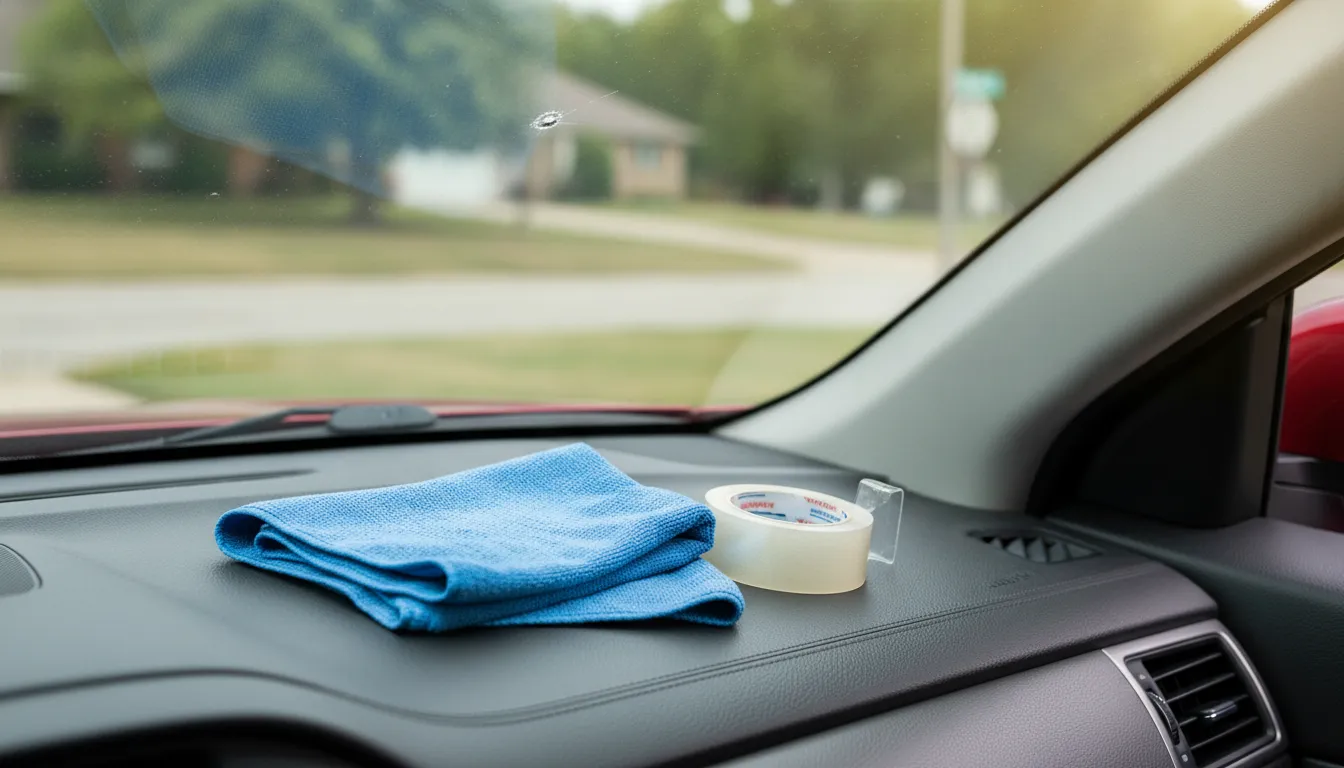
Stop adding water and grit, then cover the chip until service day. This sequence is careful driver preparation before a professional visit, not a do-it-yourself resin fill. Skip retail resin kits, super glue, and nail polish on the pit. Those household products sit in the break and can block a proper professional repair later.
If you just heard the strike, pull over only when it is safe. Our rock chip response guide covers those first minutes. Once the vehicle is parked safely, follow the steps below before anyone touches the glass.
- Look at the damage, and do not dig into it. Check the chip from inside the car in shade. Do not pick glass out of the pit with a key, a blade, or a fingernail.
- Dry only the loose water on the surface. If rain is sitting on the glass, blot the spot with a clean, dry microfiber. Do not flood the break with more liquid.
- Skip household glass cleaner directly on the chip. Ammonia cleaners and washer fluid can wick down into the open break. Clean the rest of the glass after the repair has cured.
- Press one piece of clear packing tape over the chip. Cover the chip and a small margin around it. Clear tape lets the technician see the damage without staining the pit. Duct tape, masking tape, and decorative stickers leave adhesive that is harder to remove safely.
- Keep that tape out of your main driving view. If the chip sits in the driver's sight line, use a small piece rather than a wide strip. Do not cover the whole sweep of the wiper blade.
- Park out of direct afternoon sun when you can. A shaded driveway or a covered work lot in Overland Park or Lenexa limits heat stress while you wait for service.
- Leave the tape in place until the technician removes it. Peeling the tape and pressing it back down pulls dust into the adhesive and then back onto the pit.
Tell us the vehicle, where the chip sits, and whether tape is already on it. Avision reviews the damage before preparing a quote. Those vehicle details help Avision prepare a quote for the correct glass and service.
What Should You Keep Off the Glass Before Resin Service?
Washes, wipers, and sharp tools are the three habits that most often ruin a clean pit. Each one pushes debris into the break or opens the crack further. Hold all three off from the day you notice the chip until the repair is finished.
- Automatic car washes. Rotating brushes, a high-pressure rinse, and recycled water drive grit straight into the chip. Skip the wash even when the car looks dusty from the highway.
- Drive-through bug sprays. Thick detergent sits in the pit and then dries as a stubborn film.
- Wipers on a dry or icy windshield. A dry blade can drag sand across the chip and lift a loose flake of glass.
- Metal ice scrapers and credit cards. Scrape ice around the chip rather than directly across it. Even a plastic scraper still belongs well away from the pit.
- Hot water on a frozen windshield. The sudden temperature shock can run the crack farther across the glass. Use the defroster on a low setting instead of a sudden high blast.
- Rain-repellent coatings on the damaged spot. Wax and silicone make the glass surface harder for repair resin to wet. Do not apply either product over the chip.
- Stickers, suction-cup mounts, and toll tags over the damage. Those adhesive rings are difficult to clear without scratching the pit.
Ordinary highway driving will still happen before the appointment. You cannot keep every new pebble out of the air. You can reduce new debris by keeping a longer following distance on chip-seal roads and by leaving the tape in place. If a crack grows past the tape overnight, stop adding fresh tape layers and call for service. Longer damage may no longer qualify as a simple resin repair.
Cracks that reach the edge or run through the glass often need replacement instead. The length cutoff lives in our guide to longer windshield cracks. This article stays on cleanliness, not that size decision.
How Do You Prepare the Vehicle for a Mobile Visit?
A clean work zone lets the technician reach the glass and keep fresh dust off the repair. Avision's mobile units come to homes, offices, and job sites across the Kansas City metro, including Shawnee, Leawood, Lee's Summit, and Independence. You do not drive the vehicle to a shop, and you do not leave the car overnight in a service bay.
Before the arrival window, complete these four steps:
- Park on level ground with the windshield facing away from blowing dust if you can. A garage is fine when the door can stay open for ventilation.
- Clear the dashboard and the base of the glass. Move paperwork, toll tags, and phone mounts that sit against the windshield.
- Leave the tape on the glass. The technician removes that tape as part of surface prep. Do not clean underneath the tape yourself on the morning of service.
- Plan to stay while the resin cures. Most chip repairs take 30 to 60 minutes. You should not need to move the vehicle during that repair window.
Business hours are Monday through Friday, 7:00 am to 5:30 pm, and Saturday, 7:00 am to 12:00 pm. Avision Auto Glass offers next-day service, and most chip repairs take 30 to 60 minutes. If your commute depends
on a specific arrival window, say so when you request the quote so the visit can be planned around the posted hours.
Fleet managers can line up several vehicles in one lot. Keep each damaged windshield taped, and skip the wash bay the night before the visit. A shared rinse rack is the fastest way to soak every open chip at the same time.
For a wider look at what mobile and in-shop glass work includes, read our auto glass repair guidance. That page covers the broader menu of service types. This page covers only the clean-area steps before and after a repair.
What Changes Once the Resin Is In?
The repair area is sealed, but the outer surface is still fresh. The technician injects resin, cures that resin, and levels any excess material. A small mark at the original impact point is normal after a proper fill. The goal is a stable, sealed fill rather than perfectly invisible glass.
Your job after the visit is to protect that fresh surface for the rest of the day. Do not treat the repaired spot like bare glass that still needs a deep clean.
Leave water off the repair until the technician's cure window has passed. If you were not given a specific time, wait until the next morning before any hand rinse.
Skip the automatic wash for at least 24 hours. Spinning brushes and hot wax are the harshest test for a fresh fill. A dusty hood can wait another day.
Lift wipers off the repair if a blade parks on the spot. Run the wipers only when you need a clear view in rain, and only after the surface is dry to the touch.
Do not razor the spot yourself. Leveling cured resin is already part of the service. A household blade held at the wrong angle can scratch the surrounding glass.
Skip ammonia cleaners on the repair that day. If pollen or road film bothers you elsewhere on the glass, wipe around the repair rather than across it.
Do not pick at a slight blemish. A faint mark at the pit is an expected result. Digging at that mark can reopen the fill.
Replacement glass follows different rules. A new windshield uses urethane adhesive, so door slams and tape removal follow a different cure schedule. Those replacement steps are not the same as resin chip care. If your visit becomes a full replacement, follow the adhesive instructions the technician gives you rather than the chip list above.
Seasonal stress still matters after a good fill. Our seasonal windshield care notes cover heat, ice, and washer fluid for Kansas City drivers. Use those seasonal notes for the rest of the glass. Keep the repaired pit out of the ice-scraper path throughout the winter.
How to Keep Windshield Repair Area Clean After a Chip?
Gentle and dry beats wet and aggressive. Use this table before you grab a bottle or a wash ticket. The helpful steps protect the break. The habits to avoid push dirt or water into it.
Right after the chip: Blot standing water and apply clear packing tape. Avoid glass cleaner, washer fluid, and parts-store resin kits.
While you wait: Park in shade and leave one tape layer in place. Avoid the car wash, bug spray, and wipers on the chip.
Morning of service: Clear the dash and keep the tape on. Do not peel the tape to scrub the pit.
During the visit: Stay parked for the full repair window. Do not move the car while resin is curing.
Rest of the day: Keep water, wax, and scrapers off the spot. Skip the automatic wash and any razor on the fill.
The next day: Rinse gently only if the technician cleared it. Do not pick at a normal impact-point mark.
If the tape fails during heavy rain, replace it once with a fresh piece after blotting the glass. Do not stack several dirty layers on top of each other. Each layer traps grit against the glass.
Haze on the interior glass is a separate cleaning job. Film on the inside of the windshield does not enter the chip, because the chip sits in the outer layer. You can wipe the inside glass with a clean, dry cloth. Keep any spray off the tape on the outside of the glass.
When Should You Stop Cleaning and Call for Repair?
Stop extra home care once the chip is taped and dry. More wiping does not produce a better repair. Extra scrubbing only risks a new scratch or a wider crack.
Call for service the same day you notice the damage if any of these are true.
The chip sits in the driver's view, and you cannot keep the tape small enough.
The crack grew after a cold night or after a hot afternoon on the dashboard.
Water keeps working its way back under the tape.
You already tried a store repair kit, and the pit now looks cloudy.
The damage sits near the outer edge of the glass.
A fleet vehicle has to return to a wash bay before the visit.
Avision has served the Kansas City area for more than 18 years with mobile repair and replacement. Technicians bring the repair resin and the tools directly to you. Most repairs finish in under two hours, and dedicated chip work is often 30 to 60 minutes. Pricing is quote-based, and many insurance policies treat a small repair differently from a full windshield replacement. We do not promise that every repair will cost nothing out of pocket. We can review what your policy appears to allow when you ask during the quote.
Phone (913) 314-5720 or use the contact form. Have the year, make, and model ready, and note which side of the glass holds the chip. A photo taken in the shade helps the quote. If the break is too long or too close to the edge, we will say so and talk through replacement instead of forcing a resin fill.
Same-day and next-day mobile chip repair is covered in our same-day windshield repair overview and our mobile chip repair guide. Use those guides when you are choosing a visit time. Use this page to keep windshield repair area clean until that visit and through the first day after it.
How Do Kansas City Conditions Change the Routine?
Local weather decides which threat reaches the chip first. The tape-and-wait rule stays the same in every season. The main hazard changes with the season and the road you drive.
In summer, cabin heat and a black dashboard expand the laminated glass. A chip taped in a sunny Olathe parking lot can grow before the end of the workday. Shade and a sunshade that does not press on the chip matter more than a perfect wash. Mention a morning commute when you request the quote so the visit can be planned inside posted hours.
In winter, ice and road salt become the main threat. Do not pour hot water across the frozen glass. Run the front defroster gradually instead. Keep the ice scraper off the taped spot entirely. Washer fluid helps the rest of the windshield, but it is harmful inside an open pit, so spray it only when you must see and do not aim the jet at the chip.
After storms, gravel and construction dust coat I-35 and I-70 traffic. If you must drive before the appointment, leave the tape on and increase your following distance. Additional new chips are a separate problem. One taped chip is already enough to manage.
Drivers in Liberty, Gladstone, Parkville, and Riverside follow the same steps as drivers in Leawood and Lenexa. The mobile visit comes to the parked vehicle. The clean-area work is what you handle during the hours before that arrival.
What Should You Expect the Technician to Do?
You protect the open pit. The technician cleans the impact point, fills the break, and finishes the surface. Knowing that split keeps drivers from scrubbing the spot too hard.
On site, the technician removes the tape, inspects the break, and clears the impact point so resin can enter the damage. You may see a repair bridge or injector on the glass, along with a curing light or a clear curing film. When the resin has set, the excess material is leveled flush with the glass. You should see a smoother surface and a smaller visual mark, not an open hole.
Ask two questions before the technician leaves. How long should water stay off this repair? Where should the wiper blade park tonight? Write both answers in your phone before the technician leaves. Those two answers matter more than any generic cure time you might read online.
If one leg of the crack still looks dark from the side profile, say so before the service unit leaves. A dark line can mean a section that did not fill completely. It is easier to address that line in the driveway than after a week of highway heat.
Quality notes for Kansas City drivers, including why the windshield is part of the vehicle's structure, are in our auto glass safety standards article. Read that article for the structural picture. Keep this article's steps for dirt, water, and the first day after the resin repair.
Ready for a mobile repair? Request a free same-day quote or call (913) 314-5720. Avision comes to you across the Kansas City metro.
Frequently Asked Questions
Can I wash the windshield before a chip repair?
No. Skip the car wash, thick bug spray, and glass cleaner on the chip. Blot standing water, cover the spot with clear packing tape, and leave that tape on until the technician removes it at the start of service.
What tape should I use over a rock chip?
Use clear packing tape in a single, smooth layer. It keeps out dust and water while still letting the technician see the damage. Avoid duct tape and masking tape, because both leave more adhesive on the glass.
How soon can I run the wipers after a resin repair?
Keep the wiper blade off the repair for the rest of the day. If rain makes driving unsafe, use the wipers only as needed once the repaired surface is dry to the touch. Ask the technician for the exact wait time before the service vehicle leaves.
Is a faint mark after repair a failed cleanup?
No. A small mark at the impact point is normal, because a bit of glass is missing there. Do not pick at the mark or scrape it with a household razor. Call if a dark line or a growing crack appears in the days after the visit.
Does Avision repair the chip at my location?
Yes. Mobile technicians come to homes and workplaces across the Kansas City area, including Olathe, Overland Park, and Lee's Summit. Most chip repairs take 30 to 60 minutes. Request a quote at the contact page or call (913) 314-5720.
