
Call (913) 314-5720 for a same-day fleet auto glass quote
Fleet auto glass repair is safer to book after you confirm who is licensed, who is insured, and who will stand behind the work. A low quote does not tell you whether the provider can identify the right glass, protect the vehicle, or respond if a problem shows up later. For a delivery van, work truck, or dealership unit, that gap can mean downtime, a visibility concern, or a dispute about who pays for a correction.
Avision Auto Glass is a family-owned mobile shop serving the Kansas City metro since 2006. We come to the lot or job site, handle one vehicle or a group, and call back within 24 hours to set a time that fits dispatch. Most repairs finish the next day in under two hours when the glass is in stock. Before you book any provider, the credential check below is the part of the decision that price alone cannot cover.
Why should a fleet verify credentials before fleet auto glass repair?
A business vehicle is both a safety system and a source of revenue. An incomplete installation can affect the driver's view, a door seal, a defroster, or a camera mounted on the glass. It can also pull a route, a loaner, or a job-site truck out of service. Asking about licensing and insurance before you authorize work gives the fleet a written basis for comparing companies.
A personal car can be a one-time price check. A fleet repeats the same decision across many units. A short written process keeps dispatchers from treating every cracked windshield as a new negotiation. It also gives a later reviewer a record of why the company was hired.
Price still matters. It should sit next to training, coverage, warranty terms, and the records the shop will leave behind. Those items are separate questions. A strong answer on one does not replace a weak answer on another.
What does licensed mean for an auto glass provider?
"Licensed" does not mean the same thing in every city or for every type of glass work. Rules can change with the state, the city, the business structure, and the service being sold. A clear provider should be able to name the business or trade credentials that apply and say whether they are current.
Ask for the legal business name, any local registration that applies, and the name or number of a relevant credential. Then check that the same name appears on the estimate, the invoice, the website, and the person booking the job. A direct answer is useful. Pressure to skip the question is a reason to pause.
A license is not the same thing as a manufacturer class, an industry certificate, or years on the job. Those items can be valuable. They do not prove a license is current, and they do not prove the company carries insurance. Review each one on its own.
What should a fleet manager ask about technician training?
Training questions work best when they match the vehicle in front of you. Ask whether the assigned technician has worked on your vehicle types, the glass being installed, and any steps required after the install. A cargo van, a pickup, a heavy work truck, and a passenger car can differ in access, trim, glass, and how you schedule the bay or the yard.
- Ask who will do the installation and whether that person is an employee or a subcontractor.
- Ask how the shop confirms the glass part against the VIN, model, and options.
- Ask how the crew protects paint, trim, the dash, seats, and cargo during the job.
- Ask how the technician records existing damage before work starts.
- If the vehicle has a driver-assistance camera or sensor on the glass, ask what inspection or calibration step applies after replacement.
You do not need to perform a technical inspection yourself. You need a shop that can explain a repeatable process in plain language. Drivers who report damage can follow the related fleet vehicle glass safety guide so the shop receives a clear description before it arrives.
How does provider insurance protect a fleet during glass work?
Insurance is a question about who pays if something goes wrong, not a promise that the install will be perfect. Ask what coverage the business carries, whether it is active, and what happens if the crew damages a vehicle or someone is injured on site. Policies and limits differ. A fleet can reasonably ask about general liability, workers' compensation when employees are on site, and commercial auto coverage when the shop uses vehicles for the work.
Request a certificate of insurance, or other current proof, from the provider's insurer or agent. The document should name the business you are hiring and show the effective dates. If your purchasing rules require a certificate holder, additional-insured wording, or a minimum limit, say so before the appointment. Waiting until after a loss makes the paperwork harder.
Coverage has limits. A policy may not pay every workmanship dispute, every excluded loss, or lost route time. Ask who handles a claim, what records they need, and whether a separate workmanship warranty applies. Keep that answer with the estimate.
Also separate the shop's insurance from the fleet's own commercial policy. This article is about the provider you hire. How your policy treats glass damage, deductibles, and direct billing is a different decision. Confirm that path with your insurer and your own claim records before you assume a vendor certificate answers it.
For the paperwork after the job, confirm who can approve extra work, how invoices are addressed, and whether several vehicles can sit on one account. The mobile auto glass billing guide for small fleets walks through those questions before service day.
What is the difference between insurance, a warranty, and a guarantee?
People use these words together. They answer different questions, so a fleet should keep them apart when comparing a quote.
- Business or liability insurance: may respond to certain injuries or property damage caused by the business, subject to the policy.
- Workers' compensation: generally addresses covered work injuries to eligible employees, subject to the rules and the policy.
- Workmanship warranty: states what the provider will do if a covered installation problem appears within the stated period.
- Product warranty: may come from the glass or parts maker and can use different exclusions.
- Guarantee or satisfaction promise: is a business commitment. Its scope should be written, not assumed from a slogan.
Ask for the terms in writing. Confirm the length, the exclusions, who can approve a return visit, how soon a concern must be reported, and whether the warranty follows the vehicle or the original customer. A written answer is easier to apply across a motor pool.
Do not treat a spoken promise as a complete policy. Compare the written terms with your purchasing rules and store them where dispatch can find them. For a focused list, see what a fleet should ask about an auto glass workmanship warranty.
What should a fleet ask before authorizing repair?
A short checklist keeps the first call from turning into a second visit. Record the VIN or unit number, the vehicle location, the damage, any visibility concern, and the time the unit must return to service. Then ask the provider to confirm the items below.
- Which business and technician credentials apply to this job?
- What active insurance covers the work and the worksite?
- Which glass part will be installed, and how will fit be checked?
- What is included in the quote, such as mobile service, moldings, adhesive, and cleanup?
- What safe-drive-away or cure guidance will the driver receive?
- Will the provider address cameras, sensors, wipers, trim, or a defroster when those parts are on the vehicle?
- What warranty applies, and how should the fleet report a concern?
- What invoice and service record will the business receive?
You can compare those answers without defaulting to the lowest advertised price. If a company cannot say who owns the job, what coverage applies, or what the warranty says, ask for a clearer answer before you approve the work.
Why do mobile jobs need the same credential check?
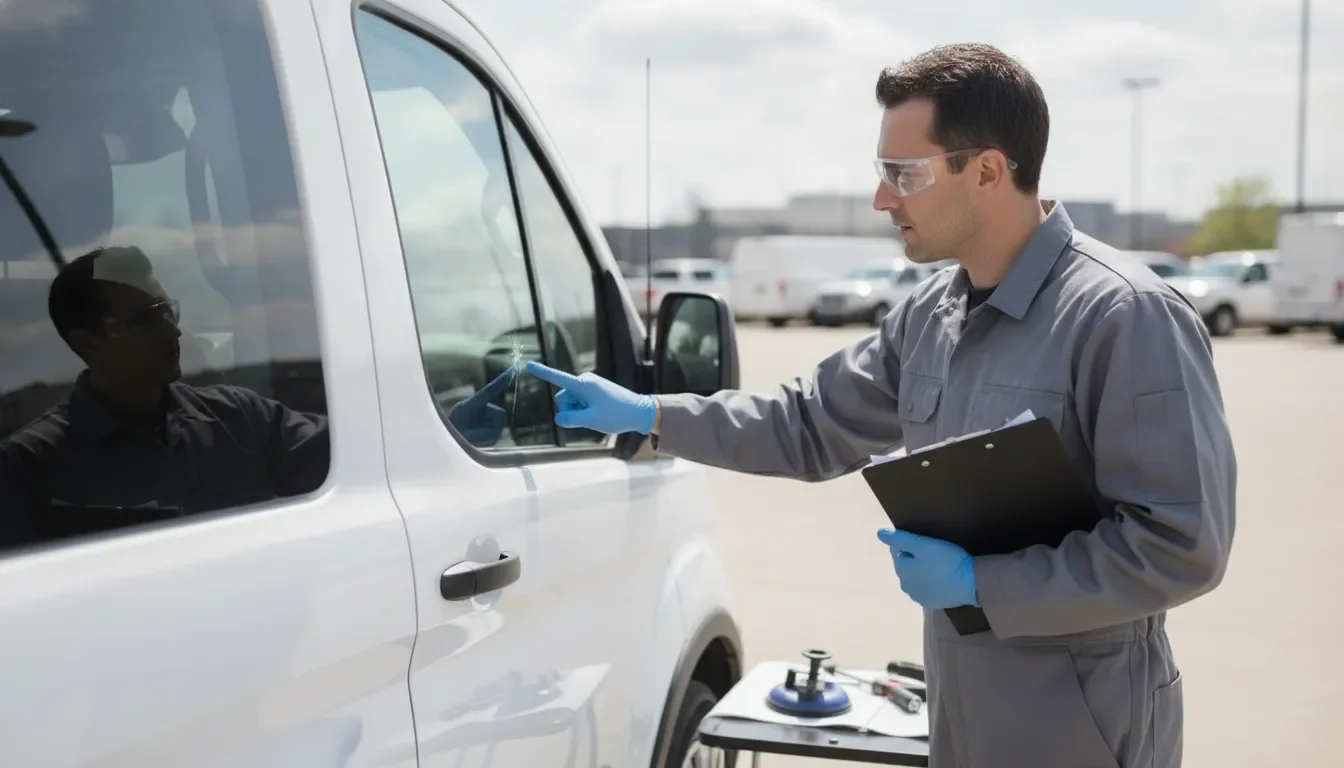
Mobile service can keep a unit on the lot, but it also creates a temporary worksite. The crew has to work around drivers, pedestrians, equipment, weather, and nearby vehicles. Ask how the provider checks the location, protects the work area, handles broken glass, and decides when conditions are not safe for the job.
Avision's fleet work is fully mobile. Crews come to dealerships, construction yards, delivery lots, and small-business parking areas across the Kansas City metro, including Johnson County, Jackson County, Clay County, Platte County, and Wyandotte County. One visit can cover more than one vehicle. That convenience does not replace a credential check. The same questions about licensing, insurance, and warranty still apply when the crew works in your yard instead of at a shop.
The appointment should still leave a clear record. The work order can name the unit, the location, the technician, the glass installed, visible existing damage, the finish time, and any follow-up. Consistent records make repeat problems easier to see. They also show that the fleet chose the provider with a process, not only a price.
Store that record with the vehicle file and the vendor documents. A useful note names the unit, the date, the service, the parts, the technician, and the next step. An invoice that only says "glass repair" is hard to use later. Managers setting up that file can use which auto glass service records a fleet should keep. If a pickup is in the group, the pickup-driver appointment checklist adds vehicle-specific prep.
For a wider look at how to compare shops, read our guide to licensed glass technicians. It covers service options, warranties, and technician expertise. This article stays on the license and insurance questions a fleet should settle before the first commercial job.
Which warning signs should make a fleet pause?
Credentials do not guarantee a perfect result. Evasive answers can still show avoidable risk. Pause the booking and get the missing item in writing before you approve the work.
- The provider will not give a legal business name or a written estimate.
- The provider cannot explain who is insured or who will perform the work.
- The price changes sharply after the vehicle is seen, with no clear reason.
- The shop discourages questions about the glass part, warranty, cure time, or follow-up.
- A driver is told to leave without clear post-installation guidance.
- The shop cannot produce a service record that fits the fleet's maintenance file.
A professional provider should define the scope and say what it can and cannot promise. If the answers stay thin, ask for a supervisor, get another quote, or wait until the fleet can decide with the facts in hand.
How can a fleet build a repeatable selection process?
Use one set of questions for every new provider, then store the answers in one place. Keep the credential reply, insurance proof, quote, warranty terms, service area, emergency contact, and finished work records together. Assign someone to review the file before the first job and again when a certificate or policy expires.
After service, ask the driver or the vehicle supervisor to note fit, leaks, visibility, trim, warning lights, and any follow-up concern. That review does not replace a professional diagnosis. It does help the fleet see a pattern before it spreads across several units.
For the worksite, write a short vendor checklist. Cover safe parking, space for pedestrians, weather, broken-glass cleanup, and the driver's instructions after service. For commercial motor vehicles, the federal glazing rule is a useful reference point. 49 CFR 393.60 sets requirements for windshields and other glazing, including cracks and obstructions that can affect the driver's view. A fleet can use that rule when deciding whether a unit should stay in service. It does not replace a local requirement or a qualified inspection.
The comparison below is a starting filter, not a legal opinion. Confirm every item against the documents the provider actually gives you.
- Business identity: Acceptable evidence is a legal name matching the estimate, invoice, and website. Pause if the names do not match.
- License or registration: Acceptable evidence is the provider naming the credential that applies and confirming it is current. Pause if only a training certificate is offered.
- Insurance proof: Acceptable evidence is a current certificate naming the business you are hiring. Pause if the only answer is that the shop is insured.
- Who does the work: Acceptable evidence is the shop stating whether the technician is an employee or subcontractor. Pause if the person doing the work is unnamed.
- Workmanship warranty: Acceptable evidence is written coverage length, exclusions, and return-visit process. Pause if the only promise is a slogan.
- Service record: Acceptable evidence is an invoice naming the unit, part, technician, and date. Pause if the note only says glass repair.
The stronger decision balances safety, accountability, fit, scheduling, and price. Licensing and insurance questions help a fleet find a company prepared to stand behind fleet auto glass repair.
Request a free same-day fleet glass quote or call (913) 314-5720 to discuss service for your vehicles.
Frequently asked questions
Is every auto glass technician required to hold the same license?
No. Credential rules vary by location, business structure, and the type of service. Ask which credentials apply to the work in your area and how you can confirm they are current.
Should a fleet request proof of insurance before the first job?
Yes, that is a sound purchasing step. It matters more when you have several vehicles, strict vendor rules, or a high cost if a unit sits idle. Ask for current proof that names the provider you are hiring.
Does insurance prove the installation will be high quality?
No. Insurance addresses certain covered risks. Training, part checks, workmanship terms, and follow-up practices help you judge quality. Review those factors together rather than relying on a certificate alone.
What should a fleet do if a concern appears after service?
Keep the unit number, the service record, photos, any warning message, and a short description of the concern in one place. Follow the provider's warranty or claim steps. Do not ask a driver to keep operating a vehicle when visibility or another safety issue is in doubt.
Learn more about licensed glass technicians, then call (913) 314-5720 for a Kansas City fleet auto glass repair quote.
