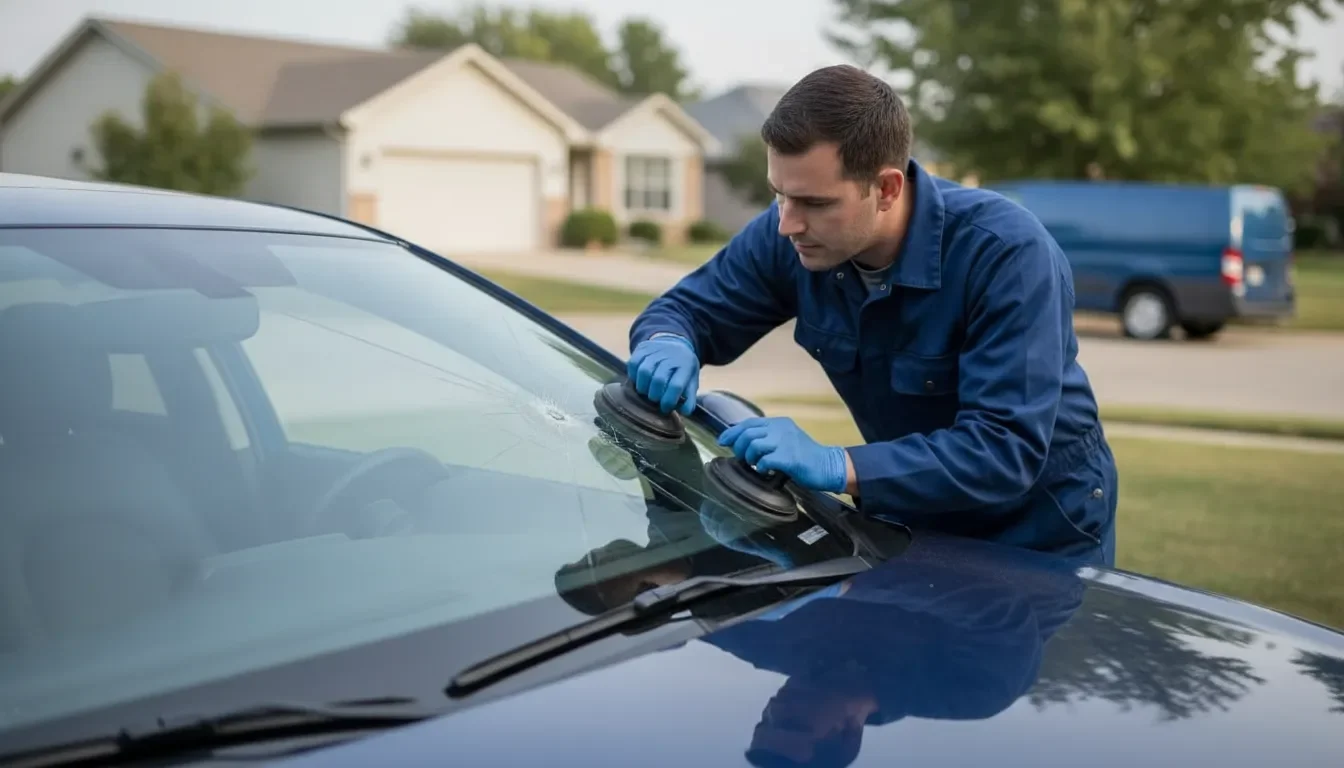
A crash-damaged windshield raises two questions. What caused the damage, and which part of your policy responds? For Kansas City drivers, the answer depends on the loss circumstances, coverage, exclusions, and deductible.
Does collision insurance cover windshield damage? It may when the windshield damage results from a covered crash. Comprehensive coverage more commonly addresses glass damage from non-collision events such as rocks, severe weather, vandalism, theft, or falling objects. Your insurer and policy language control the claim decision.
Before filing, photograph the glass and surrounding vehicle damage, record when and where the crash occurred, and keep any incident report, estimate, or invoice. Ask the insurer whether the loss falls under collision or comprehensive coverage, what deductible applies, and whether there are specific repair procedures. Understanding that distinction helps you document the claim without assuming approval.
Does collision insurance cover windshield damage after a crash?
Yes, collision coverage may apply when windshield damage is caused by a covered crash, but your policy and insurer determine whether the specific loss qualifies. Collision coverage generally addresses damage when your vehicle collides with another vehicle or object. Progressive likewise notes that collision coverage often applies when glass damage occurs in an accident with another vehicle. Read the source guidance from Progressive.
The key question is what caused the damage and which coverage your policy assigns to that event. If the windshield broke as part of a covered collision, the claim may be handled under collision coverage. If the glass was damaged by a separate non-collision event, a different coverage provision may be relevant. Those categories can sound straightforward, but the outcome still depends on the policy language, the facts of the crash, exclusions, coverage limits, and deductible. Avision Auto Glass can help coordinate claim information, but it does not decide whether an insurer covers a specific loss.
Before authorizing repair or replacement, ask your insurer whether the crash-related windshield damage falls under collision coverage. Confirm the deductible and whether the company has preferred claim or repair procedures. Take photos of the windshield and surrounding vehicle damage. Keep the crash details, incident report when applicable, estimates, and claim number. For broader context on coverage provisions, see Avision's Kansas City coverage guide. This separates the coverage decision from the safety decision to address damaged glass promptly.
Collision vs. comprehensive: which coverage usually fits?
Short answer: damage from a crash generally points to collision coverage. Windshield damage from a rock, hail, vandalism, theft, a falling object, or an animal generally points to comprehensive coverage. Your policy language, the cause of loss, and any applicable deductible control the final decision.
What caused the windshield damage?
The most useful first question is not simply whether the glass is cracked. It is what happened immediately before the damage occurred. If your vehicle struck another vehicle, a guardrail, a pole, or another object, the windshield damage may be part of a covered collision loss. Collision coverage is generally designed for damage caused when an insured vehicle collides with an object, including another car.
By contrast, comprehensive coverage generally addresses direct, accidental damage from something other than a collision. State insurance guidance commonly places broken glass and windshield damage under comprehensive coverage. It also addresses weather, vandalism, theft, falling objects, or contact with a bird or animal. A rock striking the windshield or hail hitting a parked vehicle would usually fit this category, subject to the policy.
- Crash impact: Collision coverage may apply when the glass damage resulted from an accident involving your vehicle and another vehicle or object.
- Rock or road debris: Comprehensive coverage is commonly the relevant coverage when an object strikes the windshield without a collision involving your vehicle.
- Hail or severe weather: Comprehensive coverage generally addresses weather-related damage.
- Vandalism or theft: These are typically treated as non-collision losses under comprehensive coverage.
- Falling object or animal contact: These causes are commonly associated with comprehensive coverage rather than collision coverage.
These categories are general guidance, not a coverage determination. "Full coverage" is not a standardized policy name. So ask your insurer whether your declarations include collision, comprehensive, a separate glass endorsement, and what deductible applies to each. The insurer may also classify a loss differently depending on the facts, such as whether the windshield broke during the impact or afterward.
For regional context on coverage terms and claim considerations, review this Kansas Missouri insurance guide. If you are unsure which event to report, describe the sequence accurately rather than guessing at the coverage category. Keep photos of the vehicle, the windshield, the surrounding damage, and the crash scene when it is safe to do so. Clear documentation helps your insurer evaluate whether the loss falls under collision or comprehensive coverage.
What should Kansas City drivers document before filing a claim?
Answer: Record what happened, photograph the damage and surrounding scene, preserve related reports and paperwork, and confirm your policy details with the insurer before scheduling covered work. Good documentation gives the claims representative a clearer account of the loss. It also helps you avoid relying on memory after a stressful crash. Documentation cannot guarantee claim payment, because coverage depends on the policy, circumstances, exclusions, limits, and deductible.
- Photograph the windshield and the scene. Take clear photos of cracks, chips, shattered areas, glass inside the vehicle, and any visible impact point. Capture wider images showing the vehicle's position, nearby roadway conditions, other vehicles or objects involved, and any additional damage. Photograph the vehicle identification information and odometer if your insurer requests them. Do not put yourself in danger to take a photo in traffic.
- Write down the date, location, and likely cause. Note when and where the damage occurred, including the Kansas City-area street, intersection, parking lot, highway, or other location. Describe whether the windshield was damaged during a collision, by a falling object, by road debris, or through another event. If you are unsure about the cause, state what you observed rather than guessing.
- Preserve an incident or police report when applicable. Save the report number, responding agency information, and a copy of the report if one was created. Keep exchange-of-information details and witness contact information with the claim records. A report may not be required for every windshield loss, so ask the insurer what documentation applies to your situation.
- Save estimates, invoices, and inspection records. Keep written repair or replacement estimates, invoices for completed work, photographs supplied by the glass provider, and any notes about the recommended service. If the windshield includes driver-assistance technology, ask whether an ADAS inspection or recalibration is needed after replacement, and retain that documentation too.
- Record your policy and claim details. Have your policy number, declarations page, insurer contact information, claim number, date reported, and claims representative's name in one place. Write down each instruction you receive, including whether the insurer wants an inspection, estimate, or authorization before work begins. For more detail, review these windshield insurance claim steps.
- Ask targeted coverage and process questions. Ask whether the loss is being evaluated under collision coverage, comprehensive coverage, a glass provision, or another endorsement. Confirm the applicable deductible, whether glass-specific terms apply, whether your policy has limits or exclusions, and whether the claim could affect your premium. Ask whether the insurer requires a preferred repair facility, preapproval, an inspection, or specific invoice formatting. Avision Auto Glass can help coordinate claim information, but only your insurer can determine coverage for the loss.
Keep copies of everything you submit and avoid discarding damaged glass or related records until the insurer tells you they are no longer needed. If the damage affects your view or appears to be spreading, ask a qualified auto-glass professional about safe next steps while the claim is reviewed.
How do deductibles and claim decisions affect the repair?
Answer: A windshield claim may be worth pursuing when the applicable coverage exceeds the deductible. But the decision depends on your policy, the cause of loss, and how your insurer handles claims. Avision Auto Glass can help coordinate claim information, but it cannot determine whether your policy covers a specific repair or replacement.
A deductible is the amount you pay toward a covered loss before the insurer begins making payments. Comprehensive and collision deductibles generally apply to each separate vehicle loss, so do not assume that a deductible used for a previous incident carries over. Your declarations page should show the coverage and deductible attached to the vehicle, although the full policy contains the definitions, exclusions, limits, and conditions that control the claim. The Massachusetts Division of Insurance explains why reviewing the declarations page and glass provisions matters, even though policy rules can differ by state and insurer.
Compare the deductible with the expected responsibility
Ask for a repair or replacement estimate, then compare it with the deductible that applies to this particular loss. The estimate may vary with the vehicle, glass features, ADAS calibration requirements, location, urgency, and whether repair or replacement is appropriate. Avoid relying on a generic online price. A lower-cost repair might leave little or no insurance payment after the deductible, while a replacement may involve different glass provisions or claim procedures.
Do not wait until after an accident to try to change the deductible or add glass coverage. Policy changes made after the loss generally do not apply to that claim. Before authorizing work, ask the insurer:
- Is the damage being evaluated under collision, comprehensive, a glass endorsement, or another provision?
- What deductible applies, and does it apply to this loss?
- Does the policy require an inspection, preferred repair facility, estimate, or prior authorization?
- Could filing this claim affect my premium, renewal, or claim history?
Whether a windshield claim affects premiums varies by insurer, policy, claim history, state rules, and loss circumstances. Get that answer directly from the insurer. For Kansas and Missouri filing details, review Avision's Kansas auto glass claim guide. Keep photos, crash details, estimates, invoices, and claim number with your records. Make sure required safety work, including ADAS recalibration after replacement, is addressed.
What happens after the insurer approves windshield work?
After approval, confirm the repair or replacement scope, provide accurate vehicle details, schedule the service, and keep every claim and warranty record together. Approval can simplify payment coordination, but the insurer's instructions and your policy still control what is authorized.
Start by asking the insurer or claims representative to confirm exactly what the approval covers. Clarify whether the authorization is for repair or replacement, which glass features are included. Whether a deductible applies, and whether the insurer requires a particular documentation or billing process. Avision can coordinate with insurance claims to help simplify the process, but that assistance does not determine whether a specific loss is covered. Coverage remains a decision for the insurer under the policy and claim circumstances.
When you contact the glass provider, have the vehicle identification number, year, make, model, trim, and any relevant technology details ready. Windshields are not interchangeable across every vehicle configuration. Features such as rain sensors, cameras, heating elements, head-up displays, or other embedded components can affect the correct glass and the work required. Share the insurer's approved scope and claim information so the provider can prepare an accurate, quote-based plan rather than making assumptions.
Schedule a safe, convenient service location
Kansas City drivers may be able to arrange mobile service at home, work, or another convenient location. Avision Auto Glass serves the Kansas City metropolitan area across Kansas and Missouri, bringing equipped technicians to the vehicle. The company advertises free same-day quotes and availability as soon as the next day, but those scheduling options are separate from insurer approval and depend on service conditions.
Until the appointment, avoid driving if the damage compromises visibility or the windshield is unstable. Do not remove remaining glass or disturb trim around the damaged area unless instructed. If a crack is spreading, dangerous shards are present, or the windshield is separating. Explain the safety concern when scheduling so the provider can advise on the safest next step.
Ask about ADAS recalibration
If the vehicle has a windshield-mounted camera or another advanced driver assistance system, ask whether ADAS recalibration is required after replacement. Recalibration may be necessary when the windshield is removed and installed because the camera's position and alignment can affect systems that support functions such as lane warnings or automatic braking. Avision provides ADAS calibration when required after windshield replacement. Confirm that this work is included in the approved scope or ask the insurer how it should be documented.
Finally, keep the approval notice, claim number, estimate, invoice, photos, and warranty paperwork. Avision states that replacement work is guaranteed in writing and includes a lifetime workmanship warranty. For a convenient mobile windshield replacement service in the Kansas City area, retain those records in case follow-up is needed.
When should you repair or replace crash-damaged glass?
Repair may be appropriate for limited damage, but replacement is often necessary when the windshield's safety structure or visibility is compromised. An inspection is the right way to determine which service fits the damage, vehicle, and glass features.
A small chip or short crack may sometimes be repairable when the damage is away from critical viewing areas and has not affected too much of the glass. A commonly cited rule of thumb is that a chip or crack smaller than a dollar bill may generally be repairable. But size alone does not decide the outcome. The location, depth, age, and pattern of the damage also matter. An auto-glass technician should evaluate it rather than relying on a quick visual guess.
Do not delay while deciding. A chip or crack can spread as the glass flexes and temperature changes affect the windshield. Progressive advises that a chip or crack may spread the longer you wait to repair it. A crack that was initially limited can become more extensive, reduce visibility, or leave replacement as the safer option. If the damage is growing, sits in the driver's primary line of sight, reaches an edge, or appeared during a collision, arrange an inspection promptly.
Why replacement may involve more than the glass
A windshield is part of a vehicle's safety system, not simply a transparent panel. Replacement may be recommended when the damage cannot be restored reliably through repair or when the windshield's structural role has been compromised. The technician also needs to match the replacement to the vehicle's specifications, including any built-in glass features.
Some vehicles use cameras or sensors mounted near the windshield for advanced driver assistance systems, often called ADAS. After replacement, those systems may require recalibration. Avision Auto Glass provides windshield repair and replacement, along with ADAS calibration when required after windshield replacement. Ask whether your vehicle has these features and whether calibration is part of the recommended service before work begins.
For more detail on the service decision, review our repair versus replacement guidance. If the damage followed a crash, keep your photos and claim information available. Then have the glass inspected so the repair plan reflects both safety needs and your policy's requirements.
Request a free same-day quote before reviewing the FAQs
Frequently Asked Questions
Does collision insurance cover windshield damage after a car accident?
It may, when the windshield damage results from a covered crash, such as impact with another vehicle or object. The policy's exclusions, coverage limits, and deductible still control the claim, so confirm the details with your insurer before authorizing work.
What insurance covers windshield replacement?
Coverage depends on what caused the damage. Comprehensive coverage commonly applies to non-collision glass damage, such as a rock, storm, falling object, vandalism, or animal impact. Collision coverage may apply when the glass was damaged in a covered crash. Some policies also include a separate glass endorsement.
Does full coverage insurance cover windshield replacement?
Full coverage is an informal term, not a single standardized policy. Ask whether your policy includes comprehensive, collision, glass coverage, and the applicable deductible. Having more than one of these coverages does not guarantee that a particular windshield claim will be approved.
What should I document before filing a windshield insurance claim?
Photograph the windshield and the surrounding vehicle damage, then record the date, location, crash circumstances, and any other driver's information. Keep an incident or police report if one exists, along with the repair or replacement estimate. Ask the insurer whether it requires an inspection, preferred shop, or additional documentation.
Should I use insurance to replace my windshield?
Compare the estimated repair or replacement cost with the applicable deductible and ask how the claim could affect your policy. Do not delay addressing a crack while deciding, because damage can spread and affect visibility. Your insurer can explain the claim implications, while an auto-glass professional can discuss the service options.
Ready to request a same-day auto glass quote?
Clear documentation can help you discuss crash-related windshield damage with your insurer, while a professional inspection helps identify the safest next step for the glass. Avision Auto Glass provides mobile service for Kansas City area drivers and can help you understand the work recommended without deciding your insurance coverage. To get started, request a free same-day quote or call (913) 314-5720 and share the vehicle, damage, and crash details with the team.